Family Mediation NZ: A Compassionate Path Through Separation
Navigating family separation can feel overwhelming, but there’s a supportive way forward. Discover how family mediation NZ offers a constructive, child-focused approach to resolving disputes.
Facing a relationship breakdown is one of life’s most challenging experiences, especially when children are involved. The thought of lengthy, expensive, and emotionally draining court battles can add immense stress to an already difficult situation. Many New Zealand families are seeking alternatives that prioritise respectful communication, the well-being of their children, and a sense of control over their future.
This is where family mediation steps in. It’s a powerful tool designed to help separating parents and families in New Zealand find common ground and make vital decisions together, without the need for court intervention. If you’re looking for an empathetic, efficient, and child-centred solution, understanding family mediation NZ is your first crucial step.
Table of Contents
- What is Family Mediation NZ?
- Key Benefits of Family Mediation in NZ
- The Family Mediation Process in New Zealand
- Preparing for Family Mediation: Your Action Checklist
- When is Family Mediation Not Suitable?
- Finding an Accredited Family Mediator in NZ
- Conclusion
- Frequently Asked Questions (FAQ)
- References/Sources
What is Family Mediation NZ?
At its core, family mediation NZ is a voluntary, confidential process where an independent, neutral third party – a family mediator – helps separating couples or family members communicate and negotiate agreements. These agreements typically cover crucial matters like parenting arrangements, division of property, and financial support following a relationship breakdown.
“Family mediation empowers you to make decisions about your family’s future, rather than having them made for you by a court. It focuses on finding practical, workable solutions that prioritise everyone’s best interests, especially those of your children.”
In New Zealand, this service is often referred to as Family Dispute Resolution (FDR). FDR is a specific type of mediation that is a mandatory step for most parents seeking to resolve care of children disputes before applying to the Family Court, unless specific exemptions apply. It’s designed to help you agree on co-parenting plans without court intervention.

What Family Mediation is NOT
- Not Therapy: While it can be therapeutic, mediation focuses on practical solutions and agreements, not deep-seated emotional healing.
- Not Legal Advice: Mediators are neutral and cannot provide legal advice to either party. They facilitate discussion. You may still need independent legal advice.
- Not a Court: The mediator doesn’t make decisions for you; they help you make your own decisions.
Key Benefits of Family Mediation in NZ
Choosing family mediation NZ offers numerous advantages, helping families navigate separation with dignity and focus on a positive path forward:
- Child-Focused Outcomes: Mediation prioritises the needs and best interests of children, helping parents create stable co-parenting plans. This often involves considering resources such as Newborn to Toddler Parenting Guides for age-appropriate strategies and exploring Positive Parenting Techniques & Discipline. This is often the primary driver for seeking mediation.
- Cost-Effective: Generally, mediation is significantly less expensive than going to court, saving families substantial legal fees.
- Faster Resolution: Court processes can be lengthy and unpredictable. Mediation often leads to quicker agreements, allowing families to move forward sooner.
- Confidentiality: Unlike court proceedings which are public, mediation sessions are private and confidential, fostering open and honest communication.
- Preserves Relationships: By promoting constructive dialogue, mediation helps parents maintain a respectful working relationship, which is crucial for Parental Mental Health & Self-Care (and can be complemented by resources like Māori Health Providers Northland) and effective co-parenting long-term.
- Empowering & Flexible: You and your former partner are in control of the outcomes, tailoring solutions that best fit your unique family situation, rather than a judge imposing them.
- Higher Compliance: Agreements reached through mediation tend to have higher compliance rates because both parties have actively participated in creating them.

Government data suggests that for many families, FDR (Family Dispute Resolution) is highly effective. In fact, a significant percentage of care of children disputes referred to FDR result in full or partial agreements without the need for court intervention. This highlights its value in the New Zealand legal landscape.
The Family Mediation Process in New Zealand
Understanding the steps involved can help alleviate anxiety. The family mediation NZ process is structured yet flexible, designed to guide you efficiently towards a resolution.
1. Initial Contact and Assessment
Your journey usually begins with contacting an accredited family mediator or a Family Dispute Resolution provider. You’ll have an individual assessment meeting (often called an FDR preparation session or ‘intake’) where the mediator explains the process, assesses the suitability of mediation for your situation, and discusses funding options (e.g., Legal Aid). This is a safe space to discuss your concerns confidentially.
2. Meeting with the Mediator
Each party will typically meet with the mediator individually first. This allows you to share your perspective, discuss your priorities, and understand the mediator’s role. The mediator helps you prepare for joint sessions by setting ground rules and communication strategies.
3. Joint Sessions (if appropriate)
If mediation is deemed suitable and all parties agree, joint sessions will be scheduled. These sessions, facilitated by the mediator, are where the core discussions happen. The mediator ensures a balanced discussion, helps manage conflict, and guides you towards identifying areas of agreement and exploring options for unresolved issues. The focus remains on finding mutually acceptable solutions, particularly regarding children’s welfare.
4. Reaching an Agreement
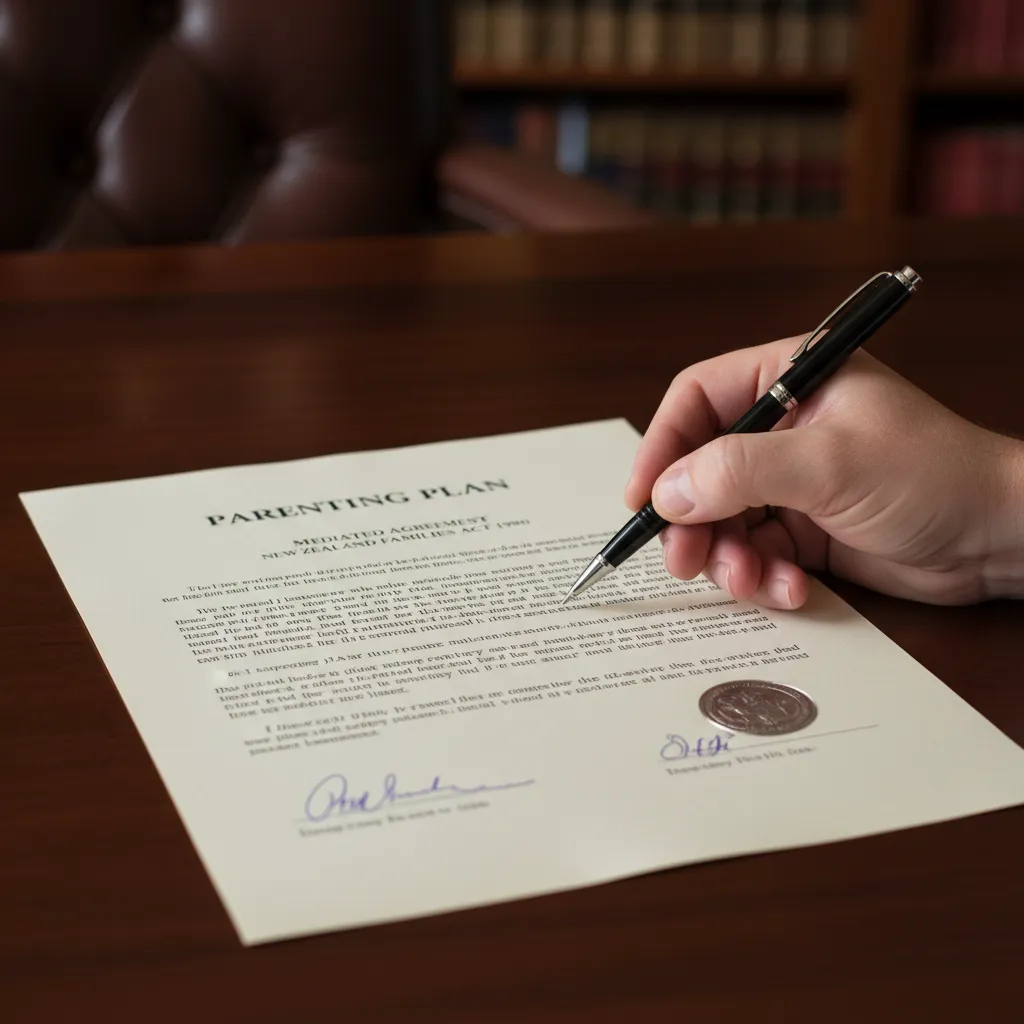
Once agreements are reached, the mediator will help you document them. This might be a detailed parenting plan, a financial agreement, or a memorandum of understanding. These documents outline the specific arrangements you’ve decided upon.
5. Formalising the Agreement
While a mediated agreement is not legally binding on its own, it’s highly recommended that you seek independent legal advice on any agreement reached. Your lawyer can then help you apply to the Family Court to have the agreement formalised into a Consent Order, making it legally enforceable.
Preparing for Family Mediation: Your Action Checklist
Being well-prepared can significantly increase your chances of a successful mediation outcome. Use this checklist when approaching family mediation NZ:
- Clarify Your Goals: What outcomes are most important to you? Be realistic and prioritise.
- Gather Information: Collect any relevant financial documents, property details, and a clear timeline of events if helpful.
- Consider Your Children’s Needs: Think deeply about what’s best for your children’s well-being and routine.
- Be Open-Minded: Be prepared to listen, compromise, and explore creative solutions.
- Focus on the Future: While past hurts are real, mediation is forward-looking.
- Seek Legal Advice: Get independent legal advice before and after mediation to understand your rights and the implications of any agreement.
- Write Down Key Points: Jot down questions, concerns, and desired outcomes to ensure you cover everything.
- Practice Active Listening: Be ready to genuinely hear the other party’s perspective, even if you don’t agree.

When is Family Mediation Not Suitable?
While highly effective for many, family mediation NZ is not appropriate for all situations. If there’s a significant power imbalance, a history of family violence, or if one party fears the other, mediation may not be safe or productive. In such cases, the mediator will identify these issues during the assessment phase and recommend alternative pathways, such as direct application to the Family Court for urgent orders or assistance from a lawyer.
Finding an Accredited Family Mediator in NZ
In New Zealand, it’s crucial to choose an accredited Family Dispute Resolution (FDR) provider. These professionals are trained to meet specific standards and are often listed on government-approved panels. You can find accredited mediators through organisations like the Resolution Institute or by searching the Ministry of Justice website for FDR providers in your area. Many also offer free initial consultations to discuss your needs.
Conclusion
Navigating separation is never easy, but family mediation NZ offers a beacon of hope and a practical pathway to resolution. By choosing mediation, New Zealand families can reduce conflict, save time and money, and most importantly, create sustainable agreements that serve the best interests of their children.
It empowers you to take control of your future, fostering communication and cooperation even amidst change. If you’re facing family disputes, explore the compassionate and effective support that family mediation can provide for your unique situation.
Frequently Asked Questions (FAQ) about Family Mediation NZ
What is Family Dispute Resolution (FDR) in NZ?
FDR is the New Zealand term for family mediation, particularly when it comes to disputes about the care of children. It’s a confidential process facilitated by an independent mediator to help parents reach agreements without going to court. For most care of children cases, FDR is a mandatory step before applying to the Family Court.
Is family mediation legally binding in New Zealand?
Initially, an agreement reached in mediation is not legally binding. However, parties can seek independent legal advice and then apply to the Family Court to have the agreement formalised into a Consent Order, which then makes it legally enforceable.
How much does family mediation cost in NZ?
The cost of family mediation varies depending on the provider and the complexity of the case. However, government funding (Legal Aid or subsidies) is available for many New Zealand families, especially for FDR regarding care of children, reducing or covering the cost for eligible individuals. It’s generally significantly cheaper than court proceedings, contributing to overall Financial Well-being & Planning.
How long does the family mediation process take?
The duration of family mediation can vary. Simple cases might be resolved in a single session, while more complex situations may require several sessions over a few weeks or months. It is typically much faster than going through the Family Court system.
Do I need a lawyer for family mediation?
While you don’t need a lawyer present during mediation sessions, it is strongly recommended that you seek independent legal advice before, during, and especially after mediation. A lawyer can advise you on your legal rights and responsibilities and help you understand the implications of any proposed agreement.
References/Sources
- Ministry of Justice NZ. Family Dispute Resolution (FDR). (Accessed November 2023).
- Resolution Institute. Finding a Mediator. (Accessed November 2023).
- Community Law Aotearoa. Care of Children Disputes. (Accessed November 2023).
- NZ Law Society. Family Law Information. (Accessed November 2023).