Family Mediation NZ: Navigating Separation with Collaborative Solutions for Parents
Navigating the complexities of separation can be one of life’s most challenging journeys, especially when children are involved. In New Zealand, finding a pathway to agreement that prioritises your family’s well-being, including Support for LGBTQ+ (Rainbow) Families in NZ, is crucial. Family mediation offers a supportive, constructive environment to achieve just that.
If you’re a parent in New Zealand facing separation, understanding your options for resolving disputes and creating a stable future is paramount. This comprehensive guide will walk you through everything you need to know about family mediation NZ, highlighting its benefits, process, and how it can lead to more peaceful, lasting solutions for your family.
Table of Contents
What is Family Mediation in NZ and How Can it Help?
In New Zealand, family mediation NZ, often referred to as Family Dispute Resolution (FDR), is a confidential and voluntary process designed to help separating parents make decisions about the care of their children, dividing property, or other family-related matters without going to court. An independent, neutral mediator facilitates discussions, ensuring all voices are heard and guiding you towards mutually acceptable solutions.
Unlike traditional court proceedings, which can be adversarial and emotionally draining, mediation focuses on collaboration and communication. It empowers parents to retain control over the decisions that impact their family’s future, rather than having outcomes imposed upon them by a judge. This approach is particularly valued in the New Zealand legal system, which prioritises the best interests of the child.

Key Benefits of Family Mediation for NZ Families
Choosing family mediation NZ offers a multitude of advantages for separating parents and their children. It’s a proactive step towards a more constructive and less stressful separation process.
Child-Focused Outcomes
Mediation places the well-being and needs of your children at the forefront. Mediators are skilled in helping parents focus on their children’s best interests, facilitating discussions that lead to stable and supportive parenting arrangements. Resources like Free Parenting Classes Christchurch can further assist parents in developing these skills. This can significantly reduce the negative impact of separation on children, and help parents recognise Signs Of Anxiety In Children to provide timely support.
Cost and Time Efficiency
Court proceedings can be lengthy and expensive. Family mediation NZ is typically a more streamlined process, often resolved in a matter of weeks or months rather than years. This saves both significant legal fees and the emotional toll of prolonged conflict. For comprehensive financial guidance during separation, parents might also consider exploring Budgeting Services Near Me.
Empowering Your Decisions
Instead of a judge making decisions for your family, mediation empowers you and your co-parent to craft bespoke solutions that truly fit your unique circumstances. This ownership often leads to agreements that are more sustainable and easier to adhere to in the long run.
Preserving Relationships
While the marital relationship may end, the parenting relationship continues. Mediation fosters better communication and cooperation between parents, which is vital for effective co-parenting. It helps reduce animosity and build a foundation for respectful future interactions.
Research indicates that mediated agreements have a higher rate of compliance compared to court orders, leading to greater long-term stability for families post-separation. (Source: Ministry of Justice NZ)

The Family Mediation Process in NZ: Step-by-Step
Understanding the steps involved in family mediation NZ can help demystify the process and prepare you for what to expect. While individual situations vary, the general flow remains consistent:
1. Initial Consultation and Assessment
Your journey begins with an initial meeting with a Family Dispute Resolution (FDR) provider. They will assess your situation, explain the mediation process, and determine if mediation is appropriate for your family. If suitable, they will help you engage the other parent.
2. Preparing for Mediation
Before joint sessions, you might have individual pre-mediation meetings with the mediator. This is an opportunity to discuss your concerns, goals, and understand the mediator’s role. It’s also a good time to gather any relevant financial or legal information if property is being discussed, essential for effective Financial Well-being & Planning.
3. The Mediation Sessions
Joint mediation sessions are facilitated by the neutral mediator. They guide discussions, help identify common ground, and explore various options for resolving disputes. The focus is on respectful communication and finding practical solutions, particularly concerning parenting arrangements and financial matters. These sessions can be conducted together in one room or via ‘shuttle’ mediation where parties are in separate rooms.
4. Formalising Your Agreement
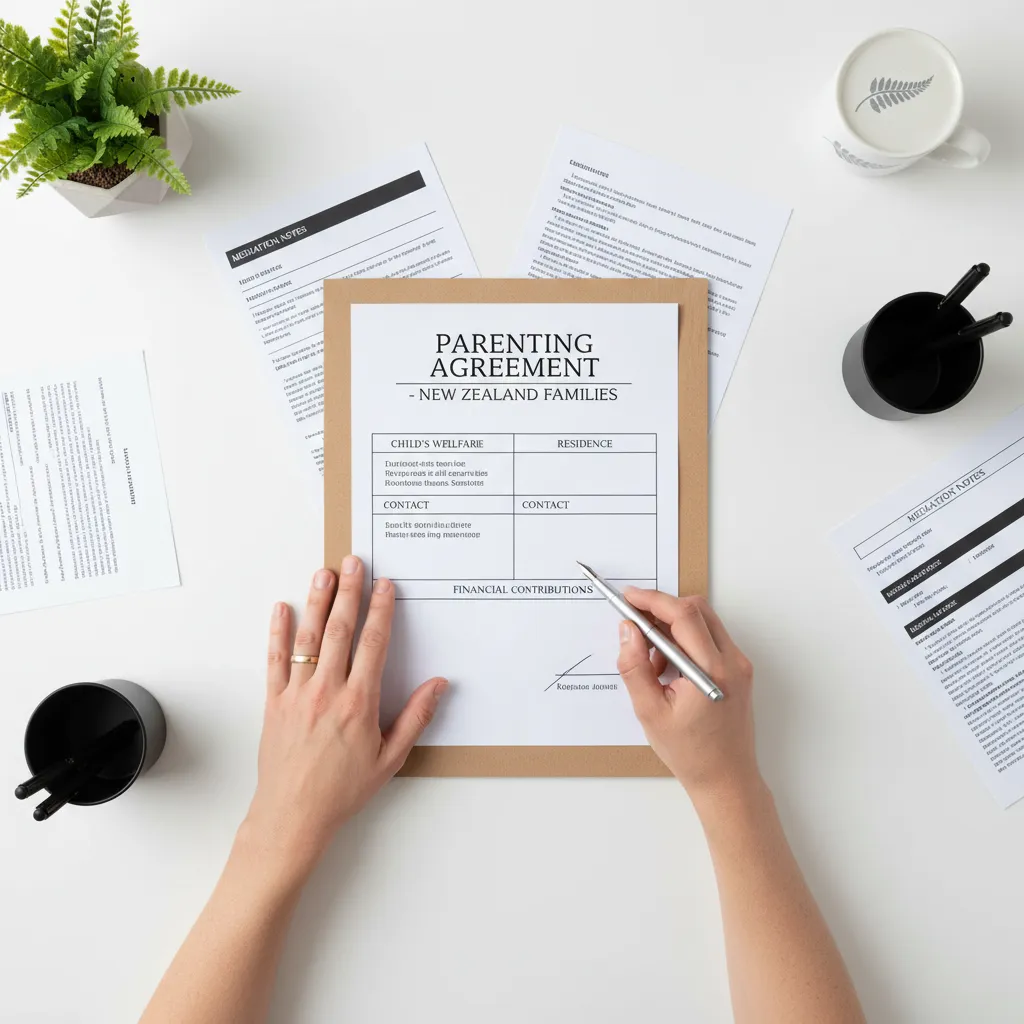
Once an agreement is reached, the mediator will help you document the terms. This written agreement, often called a ‘parenting plan’ or ‘settlement agreement,’ is not legally binding itself but can be made so by applying to the Family Court for a Consent Order. It’s always advisable to seek independent legal advice before signing any final agreement.
Maximising Your Mediation Success
To make the most of your family mediation NZ experience and achieve the best possible outcome for your family, consider these key strategies:
- Stay Child-Focused: Always remember that the primary goal is the well-being of your children.
- Be Prepared: Think about your desired outcomes and be ready to discuss your needs and concerns clearly.
- Listen Actively: Pay attention to the other parent’s perspective. Understanding their point of view can help in finding common ground.
- Be Open to Compromise: Mediation is about finding middle ground, not ‘winning.’ Flexibility is key.
- Seek Legal Advice: While the mediator is neutral, obtaining independent legal advice before and after mediation ensures your rights and obligations are fully understood.
- Be Honest and Respectful: A constructive atmosphere is essential. Engage with integrity and respect for the process and the other party.
Statistic Spotlight: A recent survey revealed that over 70% of participants in Family Dispute Resolution (FDR) in New Zealand reported reaching a full or partial agreement, demonstrating the effectiveness of the process for many families. (Source: New Zealand Law Society)

Conclusion: Your Path to a Peaceful Future
Family mediation NZ offers a powerful and humane alternative to court for separating parents in New Zealand. By fostering communication, prioritising children, and empowering parents to make their own decisions, it paves the way for more peaceful and sustainable resolutions.
If you are navigating separation, consider family mediation as your first step. It’s an investment in your family’s future well-being, providing a foundation for respectful co-parenting and a stable environment for your children.
Frequently Asked Questions About Family Mediation in NZ
- Q: Is family mediation compulsory in New Zealand before going to court?
-
In most cases involving parenting arrangements, yes. Before applying to the Family Court for a parenting order, you are usually required to attend Family Dispute Resolution (FDR) to try and resolve the issues. There are some exceptions, such as urgent cases or situations involving family violence.
- Q: How much does family mediation cost in NZ?
-
The cost of FDR can vary. For eligible families, the government subsidises up to 12 hours of FDR services, making it free or low-cost. If you don’t qualify for subsidy, you will need to pay for the mediator’s fees, which can range depending on the provider and complexity of the case. It is generally still significantly less expensive than court litigation.
- Q: What kind of agreements can be made in family mediation?
-
Family mediation can help you make agreements on a wide range of issues, including: parenting arrangements (custody and access), child support, property division (matrimonial property), financial support for spouses/partners, and other family-related disputes. The scope is broad, tailored to your family’s needs.
- Q: Do I need a lawyer for family mediation?
-
While you don’t typically have lawyers present during the actual mediation sessions (unless all parties agree), it is highly recommended to seek independent legal advice before, during, and after the mediation process. A lawyer can advise you on your rights and obligations, review proposed agreements, and help you formalise any agreement into a legally binding consent order if desired.
- Q: What happens if we can’t agree in mediation?
-
If a full agreement cannot be reached, the mediator will issue a certificate stating that FDR has been attempted. This certificate is often required to proceed to the Family Court to apply for a parenting order. Even a partial agreement can significantly narrow the issues that need to be decided by the court.
References/Sources
- Ministry of Justice NZ. (n.d.). Family Dispute Resolution. Retrieved from justice.govt.nz/family/resolving-disputes/family-dispute-resolution/
- New Zealand Law Society. (n.d.). What is Family Dispute Resolution (FDR)? Retrieved from lawsociety.org.nz/for-the-public/family-law/family-dispute-resolution-fdr/
- Family Court of New Zealand. (n.d.). Parenting Orders. Retrieved from justice.govt.nz/family/care-of-children/parenting-orders/