Government Financial Assistance for Families in NZ: Your Essential Guide
Navigating the landscape of government financial assistance can feel overwhelming, especially when you’re focused on supporting your family. In New Zealand, a range of initiatives are designed to help families with the costs of raising children, housing, and childcare. Understanding these vital government benefits for families NZ can make a significant difference to your household budget and overall well-being.
This comprehensive guide is here to demystify the process, explain key entitlements like the family tax credit NZ, and provide clear steps on how to access the support you’re eligible for. We’ll break down the main types of assistance available, from tax credits to childcare subsidies and accommodation support, ensuring you have the knowledge to secure your family’s financial future.
1. Eligibility for Working for Families Tax Credits
Working for Families (WFF) Tax Credits are a package of four payments designed to make it easier to work and raise a family. Administered by Inland Revenue (IRD), these credits help ensure families have enough money to meet their children’s needs. They are not a benefit from Work and Income, but rather a top-up based on your family’s income and circumstances.
Did you know? As of 2023, around 350,000 New Zealand families receive Working for Families Tax Credits, significantly impacting their financial stability. These credits are crucial for many households.

Key Components of Working for Families:
- Family Tax Credit (FTC): The main WFF payment, paid for each child. Eligibility depends on your family income and the number of dependent children. This is a primary component of government benefits for families NZ.
- In-Work Tax Credit (IWTC): Encourages work by providing an extra payment for families who are employed or self-employed for a certain number of hours per week.
- Minimum Family Tax Credit (MFTC): Ensures that working families receive a minimum after-tax income each year. If your income falls below this threshold, the MFTC tops it up.
- Parental Tax Credit (PTC): A short-term payment for up to 10 weeks after a child is born, if you’re not getting paid parental leave and your income is below a certain level.
Who is Eligible?
To be eligible for Working for Families, you generally need to:
- Be a New Zealand tax resident.
- Be the principal caregiver for a dependent child or children aged 18 or under.
- Meet specific income thresholds, which vary depending on the components you apply for and your family size.
It’s essential to keep your income information updated with IRD to ensure you receive the correct payments and avoid overpayments.
2. Childcare Subsidies NZ
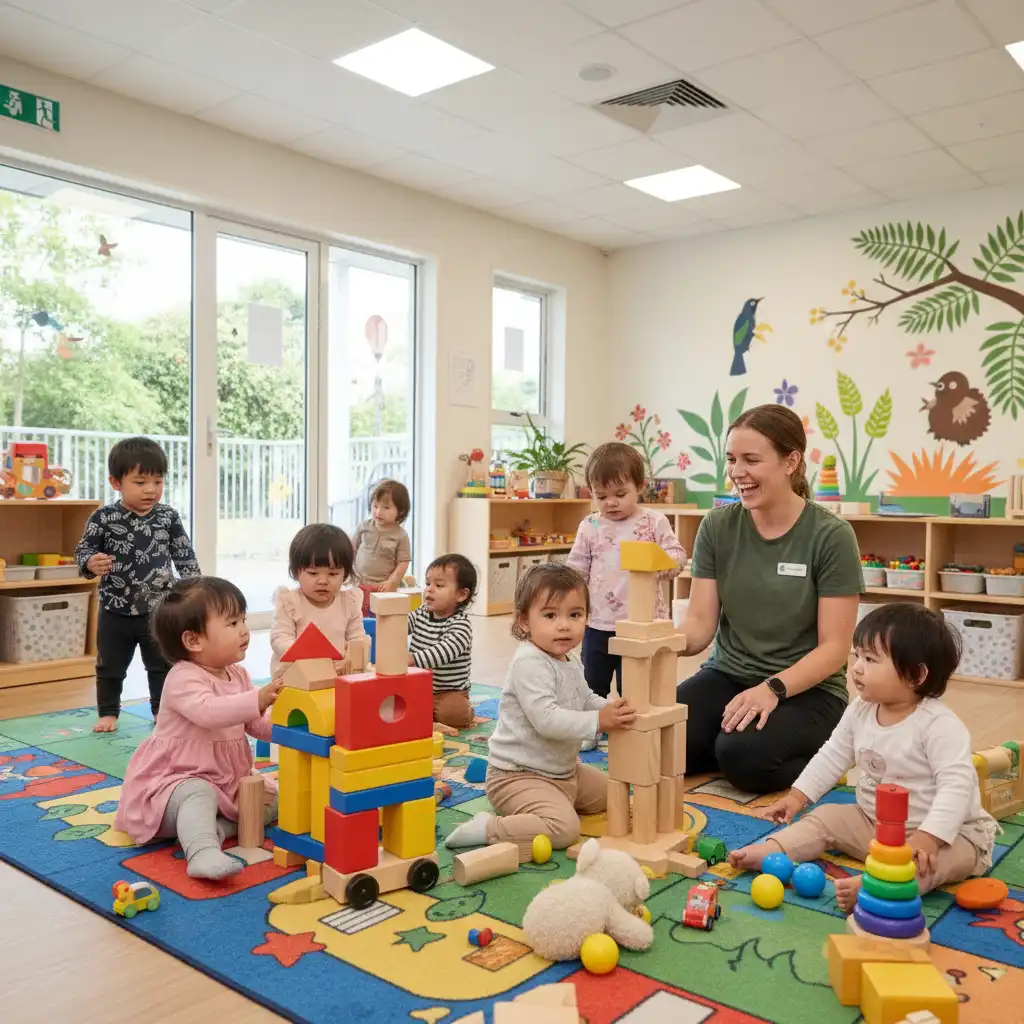
The cost of childcare can be a significant hurdle for many New Zealand families. Work and Income (MSD) offers various childcare subsidies NZ to help ease this financial burden, enabling parents to work, study, or attend approved training. These subsidies are paid directly to your childcare provider.
Types of Childcare Subsidies:
- Childcare Subsidy: Helps with the cost of pre-school, sessional, or out-of-school care for up to 9 hours a week for children under 5. If you’re working, studying, or training, it can cover up to 50 hours a week.
- OSCAR Subsidy: Specifically for out-of-school care (before-school, after-school, and school holiday programmes) for children aged 5 to 13 (or 14 if receiving a Child Disability Allowance).
Eligibility Criteria:
To qualify for a childcare subsidy, you must meet several criteria:
- Your child must be attending an approved early childhood education (ECE) service or OSCAR programme.
- Your family must meet specific income thresholds.
- You must be a New Zealand citizen or permanent resident.
- You must be working, studying, training, or have a disability or health condition that prevents you from caring for your child.
The amount of subsidy you receive depends on your income, the number of children in care, and the hours of care needed. It’s not uncommon for families to combine 20 hours ECE (a universal government payment) with additional childcare subsidies for extended hours.
3. Accommodation Supplement
Housing costs in New Zealand can be substantial, and the Accommodation Supplement is designed to help with rent, board, or home ownership costs (like mortgage payments, rates, and insurance) if you’re not already receiving other housing-related benefits. This is a non-taxable payment from Work and Income.
On average, the Accommodation Supplement helps over 100,000 households nationwide, with payments varying significantly based on location and specific needs. It’s a key support for managing housing affordability.

Who Can Get It?
Eligibility for the Accommodation Supplement is based on several factors:
- Your income and assets.
- Your accommodation costs (rent, board, or mortgage payments).
- Where you live in New Zealand, as maximum rates vary by region.
- Your family size and specific circumstances.
- You cannot be living in public housing or already receiving another housing-related benefit from Work and Income (e.g., Temporary Additional Support that covers accommodation costs).
It’s important to understand that the Accommodation Supplement is income and asset tested, and the amount you receive is tailored to your unique situation. Work and Income has online tools to help estimate your entitlement.
4. Applying for Financial Aid: A Step-by-Step Guide
Applying for financial assistance doesn’t have to be a daunting process. By following these steps, you can streamline your application for government benefits for families NZ and ensure you provide all necessary information, contributing to your overall Financial Well-being & Planning.

Step 1: Determine Your Eligibility
Before applying, use online eligibility checkers on the Inland Revenue (IRD) and Work and Income websites. These tools can give you an estimate of what you might be entitled to, based on your income, family size, and other factors. This initial check can save you time and effort.
Step 2: Gather Necessary Documentation
Prepare all required documents in advance. Note that if you need help certifying documents, Finding a JP in My Suburb can assist in locating a Justice of the Peace. This typically includes:
- Proof of identity (e.g., passport, birth certificate, driver’s license).
- Proof of income (e.g., payslips, IRD summary of earnings, bank statements).
- Proof of expenses (e.g., rent agreements, mortgage statements, childcare invoices).
- Details of your children (e.g., birth certificates).
- Bank account details for payments.
Step 3: Choose Your Application Method
You can generally apply for most government assistance:
- Online: For IRD (Working for Families), use your MyIR account. For Work and Income benefits, use MyMSD. Online applications are often the quickest and most convenient.
- By Phone: You can call IRD or Work and Income to discuss your eligibility and start an application.
- In Person: Visit a Work and Income service centre. They can provide guidance and assist with the application process directly, and also refer to specialist support for issues like Domestic Violence: Getting Help & Support, Low-Cost Counseling Services, or regional specific assistance such as Family Support Services Auckland.
Step 4: Complete the Application Form Accurately
Fill out all sections of the application form completely and accurately. Incomplete or incorrect information can cause delays. If you’re unsure about a question, it’s better to ask for clarification from IRD or Work and Income.
Step 5: Follow Up and Keep Records
After submitting your application, you may be contacted for further information. Respond promptly. Keep copies of all documents submitted and a record of any correspondence or phone calls. This helps you track your application’s progress and resolve any issues that may arise.
Frequently Asked Questions (FAQ)
-
Who is eligible for Working for Families Tax Credits?
-
Generally, you must be a New Zealand tax resident, be the principal caregiver of a dependent child under 18, and meet specific family income thresholds set by Inland Revenue (IRD). There are four components, each with slightly different criteria.
-
How do I apply for a childcare subsidy in NZ?
-
You apply through Work and Income (part of the Ministry of Social Development – MSD). You can apply online via MyMSD, by phone, or in person at a service centre. You’ll need to provide proof of identity, income, your child’s attendance at an approved childcare provider, and your reasons for needing care (e.g., work or study).
-
What is the Accommodation Supplement and can I get it?
-
The Accommodation Supplement is a weekly payment from Work and Income to help with rent, board, or home ownership costs. Eligibility depends on your income, assets, accommodation costs, and where you live. It’s income and asset tested, and you generally can’t receive it if you’re already in public housing or getting another housing-related benefit.
-
Are government benefits for families considered taxable income in NZ?
-
Most core government benefits from Work and Income (e.g., Sole Parent Support, Jobseeker Support) are taxable income. However, some payments like the Working for Families Tax Credits and the Accommodation Supplement are generally non-taxable. Always check with IRD or Work and Income for specific payments.
-
Where can I find an online calculator for NZ family benefits?
-
Both Inland Revenue (IRD) and Work and Income (MSD) provide online tools and calculators. IRD has a ‘Working for Families Tax Credits estimator,’ and Work and Income offers a ‘Check what you might get’ tool on their website, which helps estimate entitlements for various benefits and subsidies.
References & Sources
- Inland Revenue (IRD) – Working for Families Tax Credits: www.ird.govt.nz/working-for-families
- Work and Income (Ministry of Social Development) – Childcare Subsidy: www.workandincome.govt.nz/products/a-z-benefits/childcare-subsidy.html
- Work and Income (Ministry of Social Development) – Accommodation Supplement: www.workandincome.govt.nz/products/a-z-benefits/accommodation-supplement.html
- Statistics New Zealand (Stats NZ) – Income and expenditure data (for general context on family support): www.stats.govt.nz/topics/income-and-work
- New Zealand Government – Official website (for policy context): www.govt.nz