Navigating Modern Family Life: Understanding Your Eligibility for Winter Energy Payment in NZ
Last Updated: 22 December 2025 08:28 PM | Est. Read Time: 12 mins
Determining your eligibility for winter energy payment is the first step toward securing a warmer, healthier home during the challenging New Zealand winter months. This automatic payment, managed by the Ministry of Social Development (MSD), aims to alleviate the financial pressure of rising heating costs for seniors and low-income families from May to October each year.

Eligibility for Winter Energy Payment: Am I Eligible?
To establish your eligibility for winter energy payment, you must first be a resident of New Zealand and currently receiving a qualifying payment from Work and Income or Veterans’ Affairs. This initiative was designed to ensure that the most vulnerable members of our society—our kaumatua and those on restricted incomes—don’t have to choose between food and heat.
Unlike many other government grants, this payment does not require a separate application if you are already in the system. However, understanding the specific criteria is vital to ensure your household budget is accurately calculated for the 2026 winter season.
“The Winter Energy Payment is more than just a fiscal subsidy; it is a public health initiative designed to reduce hospitalisations related to cold, damp housing across Aotearoa.” — NZ Social Policy Review
- You must be receiving a main benefit (e.g., Jobseeker Support).
- You must be receiving NZ Superannuation or Veteran’s Pension.
- You must be physically present in New Zealand (subject to travel rules).
- You must not be receiving a Residential Care Subsidy.
Who qualifies for the Winter Energy Payment in New Zealand?
The scope of eligibility for winter energy payment covers a broad spectrum of the New Zealand population. If you are receiving any of the following benefits, you are typically eligible for the automatic weekly payment:
- New Zealand Superannuation
- Veteran’s Pension
- Jobseeker Support
- Sole Parent Support
- Supported Living Payment
- Young Parent Payment
- Youth Payment
- Emergency Benefit
It is important to note that if you are receiving a Residential Care Subsidy or Residential Support Subsidy because you are in long-term residential care (like a rest home), you do not qualify. This is because your heating costs are covered by the facility provider as part of your overall care package.

When does the Winter Energy Payment start and end in 2026?
For the 2026 calendar year, the payment period follows the standard legislative cycle. The payment begins on 1 May 2026 and concludes on 1 October 2026. This covers the five months where New Zealand temperatures traditionally drop, increasing the demand on the national grid and individual household electricity bills.
Because the payment is tied to your regular benefit cycle, the exact date you see the first payment in your bank account will depend on your usual pay day. For example, if your benefit is paid on a Tuesday, your first Winter Energy Payment will appear on Tuesday, 5 May 2026.
The total duration is 22 weeks. If you become eligible for a benefit halfway through the winter, your payments will start from that date and continue until the start of October. You won’t receive back-dated payments for the months you weren’t on a benefit.
How much is the Winter Energy Payment for couples vs individuals?
The rates for the 2026 season are adjusted to help reflect the cost of living. There are two primary tiers of payment based on your living situation. These amounts are non-taxable and do not count as income for other benefit assessments.
- Single people (with no dependent children): $20.46 per week.
- Couples and people with dependent children: $31.82 per week.
If you are a couple, you will receive one payment of $31.82 per week between you. Usually, this is paid to the primary applicant of the benefit. For those on NZ Superannuation, if you receive a ‘split’ payment, the Winter Energy Payment is also split between both partners.
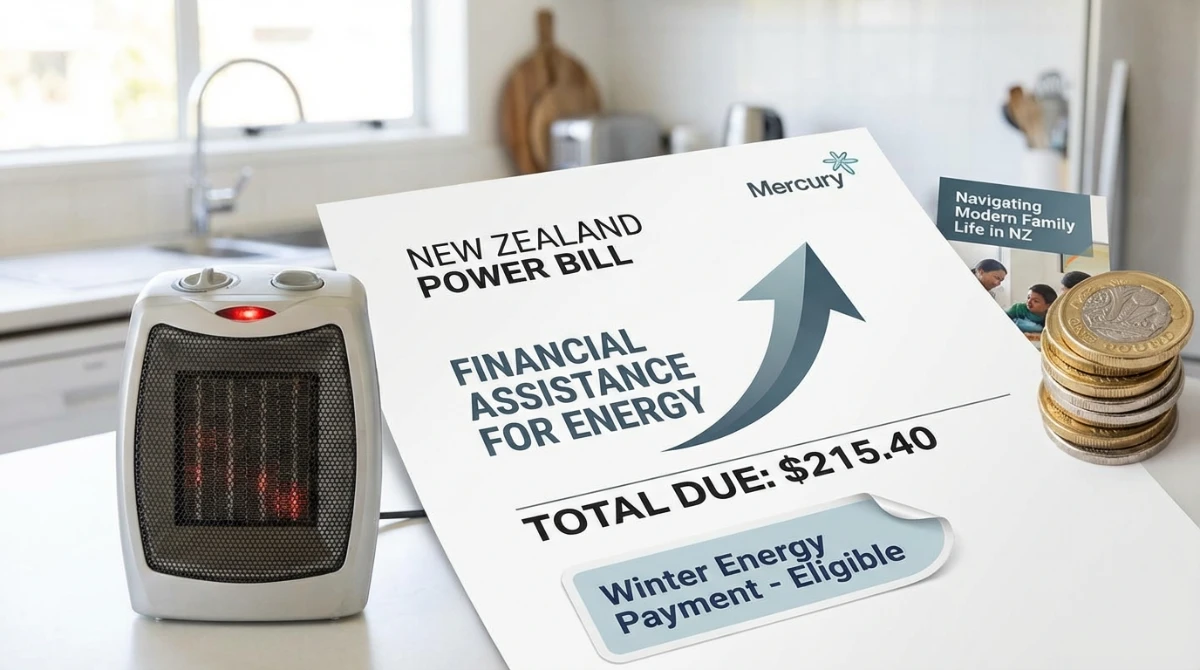
Over the full 22-week period, a single person will receive a total of $450.12, while a couple or a family with children will receive $700.04. These funds are intended to be used for heating, but the government does not require you to provide receipts; the money is yours to manage as you see fit for your household needs.
Do you need to apply for the Winter Energy Payment manually?
One of the most common questions regarding eligibility for winter energy payment is the application process. For the vast majority of New Zealanders, you do not need to apply. Work and Income (MSD) identifies eligible recipients through their internal database and triggers the payment automatically.
If you are already receiving a benefit or NZ Super, you will receive a letter or an email in April 2026 confirming that the payments will begin in May. If you do not receive this notification but believe you are eligible, you should contact Work and Income via the MyMSD portal or their toll-free number.
However, you can choose to opt out. If you feel you do not need the payment, or if your circumstances change and you no longer wish to receive it, you can notify MSD to stop the payments at any time. You can also choose to restart them later if your situation changes again during the winter period.
For more official details on benefit types, visit the Work and Income official site or check the NZ Legislation for the Social Security Act requirements.
What happens if I go overseas during the winter months?
The eligibility for winter energy payment is strictly tied to your physical presence in New Zealand. This is because the payment is specifically designed to help with the cost of heating a home within the New Zealand climate. If you travel overseas, your payment will stop.
MSD allows a grace period of 28 days for those on NZ Super or Veteran’s Pension. If you are away for more than 28 days, the payments will stop from the day you left New Zealand. For those on main benefits like Jobseeker Support, the rules are even stricter, as overseas travel often affects your primary benefit eligibility as well.

It is your responsibility to notify Work and Income of your travel plans. Failure to do so can result in an overpayment, which the government will later seek to recover from your future benefit payments.
“Transparency with MSD regarding travel is essential. Many recipients are surprised when an overpayment debt is lodged because they didn’t realize the Winter Energy Payment stops immediately upon departure for most benefit types.” — Community Law NZ
Beyond the Winter Energy Payment: Efficiency Tips
While the payment helps with the cost, improving the energy efficiency of your home can make that money go much further. Consider the following steps to maximize your comfort:
- Check your insulation: Ceiling and underfloor insulation can save up to 30% on heating costs.
- Use thick curtains: Closing curtains before dusk traps the day’s heat inside.
- Heat pump maintenance: Clean your filters every few months to ensure the unit operates efficiently.
- Check for draughts: Use draught stoppers for doors and windows.
If you are a homeowner on a low income, you may also be eligible for the Warmer Kiwi Homes program, which provides grants for insulation and efficient heaters. This can be used in conjunction with your weekly winter payment for long-term savings.

Key Takeaways for NZ Households
- Automatic Entry: Most eligible New Zealanders are enrolled automatically based on their current benefit status.
- Exact Dates: The 2026 payment period is 1 May to 1 October.
- Rate Differences: $20.46/week for singles, $31.82/week for couples/families.
- Travel Warning: Payments stop if you are overseas for more than 28 days (or immediately for some benefits).
- Tax-Free: These payments are not taxed and do not impact other income-tested benefits.