Working for Families Tax Credits Guide: Navigating Working for Families NZ
Understanding the nuances of working for families NZ is essential for every New Zealand household seeking financial stability and support for their children. As the cornerstone of the government’s support system, these tax credits provide a vital lifeline to thousands of families, ensuring that the costs of raising children do not become an insurmountable burden. This definitive guide serves as an exhaustive resource for parents, caregivers, and financial advisors looking to maximize their entitlements while remaining fully compliant with Inland Revenue (IRD) regulations. By the end of this article, you will have a mastery of the eligibility criteria, the calculation methodologies, and the strategic application processes required to manage your family’s financial future effectively.
Table of Contents
- 1. Defining Working for Families NZ and its Core Purpose
- 2. Comprehensive Eligibility Requirements for Working for Families NZ
- 3. The Four Pillars: Types of Tax Credits Available
- 4. Understanding Adjusted Net Income and Abatement Rates
- 5. The Application Process and Managing Your myIR Profile
- 6. Special Considerations: Shared Care and Complex Household Structures
- 7. How to Avoid Overpayments and IRD Debt
- 8. Conclusion and Key Takeaways

Defining Working for Families NZ and its Core Purpose
Working for Families NZ is a comprehensive package of tax credits designed to help make it easier to raise a family while you are working. It is managed primarily by Inland Revenue, though certain aspects interact closely with the Ministry of Social Development (Work and Income). The scheme is not a single payment but a collection of four distinct credits tailored to different stages of a child’s development and the employment status of the parents.
The primary goal of the system is to ensure that families are better off while working than they would be on a benefit, incentivizing employment while acknowledging the high cost of living in New Zealand. For many households, these credits can mean the difference between struggling and thriving, particularly in the face of rising inflation and housing costs. Whether you are a salary earner, a self-employed contractor, or a wage worker, understanding how these credits aggregate is fundamental to your household budgeting.
Comprehensive Eligibility Requirements for Working for Families NZ
To qualify for working for families NZ, several foundational criteria must be met. These criteria ensure that the support is targeted toward those who are actively contributing to the New Zealand economy or are in need of specific assistance during the early years of a child’s life.
- Residency Status: You must be a New Zealand resident and have lived in the country for at least 12 continuous months at any time.
- Dependent Children: You must be the principal caregiver for a dependent child aged 18 or under. A child is generally no longer considered dependent if they are working more than 30 hours per week or are receiving a benefit themselves.
- Age Limits: While most credits apply to children up to age 18, certain credits, like Best Start, are strictly for those under age 3.
- Income Source: Your eligibility for specific credits (like the In-work tax credit) depends on your source of income and whether you are receiving other government assistance.
It is important to note that “principal caregiver” refers to the person who has the primary responsibility for the day-to-day care of the child. In cases of shared care, the credits are typically split proportionately between the caregivers, provided each has the child for at least one-third of the time.
The Four Pillars: Types of Tax Credits Available
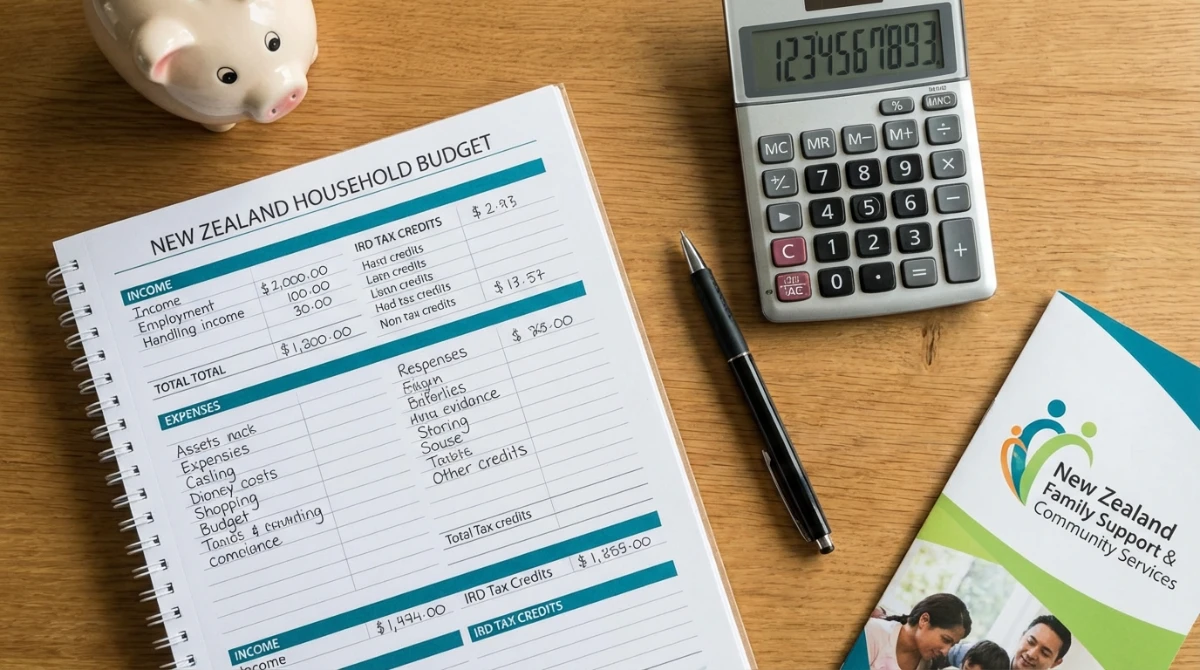
The working for families NZ package is comprised of four distinct tax credits. Each has its own rules, thresholds, and target demographics.
1. Family Tax Credit
The Family Tax Credit is the most widely distributed component. It is a payment for each dependent child in your care. The amount you receive depends on the number of children you have and your total household income. This credit is paid regardless of whether your income comes from work, a benefit, or other sources, though it is subject to abatement as your income rises.
2. In-work Tax Credit
This is a payment for families who are in paid work and are not receiving an income-tested benefit or a student allowance. Unlike the Family Tax Credit, this specifically rewards workforce participation. Currently, there is no minimum hour requirement (a recent change from previous years), but you must have some level of earned income from employment or self-employment.
3. Minimum Family Tax Credit
The Minimum Family Tax Credit is designed to ensure that low-income working families have a guaranteed minimum after-tax income. If your family’s annual income falls below a certain threshold (currently adjusted annually), this credit tops up your income to that set level. To qualify, a single parent must work at least 20 hours per week, or a couple must work a combined 30 hours per week.
4. Best Start Tax Credit
Best Start is a payment to help with the costs of a child’s first three years. For the first year of a child’s life, every family is eligible regardless of income. For the second and third years, the payment is income-tested and will gradually reduce as your income exceeds the threshold. This credit is particularly helpful for covering the costs of nappies, formula, and early childcare.

Understanding Adjusted Net Income and Abatement Rates
One of the most complex aspects of working for families NZ is the calculation of “Adjusted Net Income.” This is not simply your gross salary; it includes several other types of income that IRD considers when determining your payment rates.
Income types that must be declared include:
- Gross wages and salary.
- Self-employed net profit.
- Shareholder-employee salaries.
- Rental income.
- Interest and dividends.
- Income from a trust (if you are the settlor).
- Fringe benefits (in certain circumstances).
- PIE (Portfolio Investment Entity) income.
The Abatement Rate is the rate at which your tax credits are reduced as your income increases. Currently, for every dollar you earn over the threshold of $42,700, your tax credits are reduced by 27 cents. This is known as the abatement rate. Managing this is crucial; if you underestimate your income, you may face a significant bill at the end of the tax year. Conversely, overestimating your income means you receive less support during the year than you are entitled to, though you will receive a lump sum refund after the year-end square-up.
The Application Process and Managing Your myIR Profile
Applying for working for families NZ has been streamlined through the Inland Revenue’s myIR portal. The process is digital and requires several key pieces of documentation to ensure accuracy.
- IRD Numbers: Ensure you have IRD numbers for yourself, your partner, and all your children.
- Income Estimates: You must provide an accurate estimate of your total household income for the current tax year (April 1 to March 31).
- Bank Account Details: Payments are made weekly or fortnightly directly into your bank account.
- Child Details: Proof of birth or care arrangements may be required if not already on file.
Once your application is processed, you can manage your details via myIR. It is your responsibility to update the IRD if your income changes by more than 5%, if a child leaves your care, or if your relationship status changes. Failure to do so is the leading cause of “tax debt” within the New Zealand family support system.

Special Considerations: Shared Care and Complex Household Structures
In New Zealand, many families operate under shared care arrangements. For the purposes of working for families NZ, if you have care of a child for at least 33% of the time, you may be eligible for a portion of the tax credits. The IRD calculates this based on the number of nights the child spends with each parent or the total hours of care provided.
Complex situations also arise for self-employed individuals or those with business structures like LTCs (Look-Through Companies) or Family Trusts. In these cases, the IRD looks through the structure to the underlying income. It is highly recommended to consult with a tax accountant if your income is not derived solely from a standard PAYE salary, as the definitions of income for Working for Families are broader than those for standard income tax.
How to Avoid Overpayments and IRD Debt
The “square-up” process occurs at the end of every tax year. IRD compares the amount they paid you based on your estimate with the amount you were actually entitled to based on your final declared income. This often results in a “wash-up” where you either get a refund or owe money.
To avoid a large bill, consider the following strategies:
- Update Income Frequently: Log into myIR every three months to ensure your income estimate remains accurate.
- Choose Lump Sum Payments: If your income is highly volatile (e.g., you are a contractor), you can choose to receive your credits as a lump sum at the end of the year rather than periodic payments. This eliminates the risk of overpayment debt.
- Notify of Relationship Changes: Moving in with a partner or separating significantly alters your entitlement. Notify IRD immediately upon a change in living arrangements.
- Monitor Bonuses: If you receive a one-off performance bonus at work, remember that this counts toward your adjusted net income and may trigger an abatement of your credits.
Conclusion and Key Takeaways
Navigating working for families NZ requires diligence, but the rewards are significant for your family’s financial well-being. By understanding the four pillars of the tax credit system—Family Tax Credit, In-work Tax Credit, Minimum Family Tax Credit, and Best Start—you can ensure your household receives the maximum support possible. Remember that the system is designed to be flexible, but that flexibility requires proactive management of your income estimates and personal details via myIR. Whether you are welcoming a new baby or managing a busy household of teenagers, these credits are your right as a contributing member of the New Zealand community.
Key Takeaways
- Working for families NZ consists of four distinct tax credits tailored to different family needs.
- Best Start is universal for the first year of a child’s life, regardless of household income.
- The abatement rate is 27 cents for every dollar earned over $42,700.
- Accuracy in your income estimate is the best way to avoid IRD debt at the end of the tax year.
- Shared care arrangements (at least 33% care) allow for proportional tax credit payments.
- Always use myIR to update life changes immediately to ensure payment continuity.