Te Reo & Tikanga Māori in Daily Parenting
Est. Read Time: 10 mins | Last Updated: 22 December 2025 12:10 AM
Normalising te reo at home is a transformative journey that allows New Zealand whānau to honour the indigenous language of Aotearoa while providing tamariki with a rich, bicultural foundation for life. Integrating te reo Māori into your daily routine creates a nurturing environment where cultural identity, linguistic diversity, and the values of tikanga become second nature to your children.
Integrating Te Reo at Home: Why It Matters
The revitalisation of te reo Māori begins within the walls of our own homes. When we choose to use te reo at home, we are not just teaching words; we are transmitting a worldview that values connection, respect, and heritage.
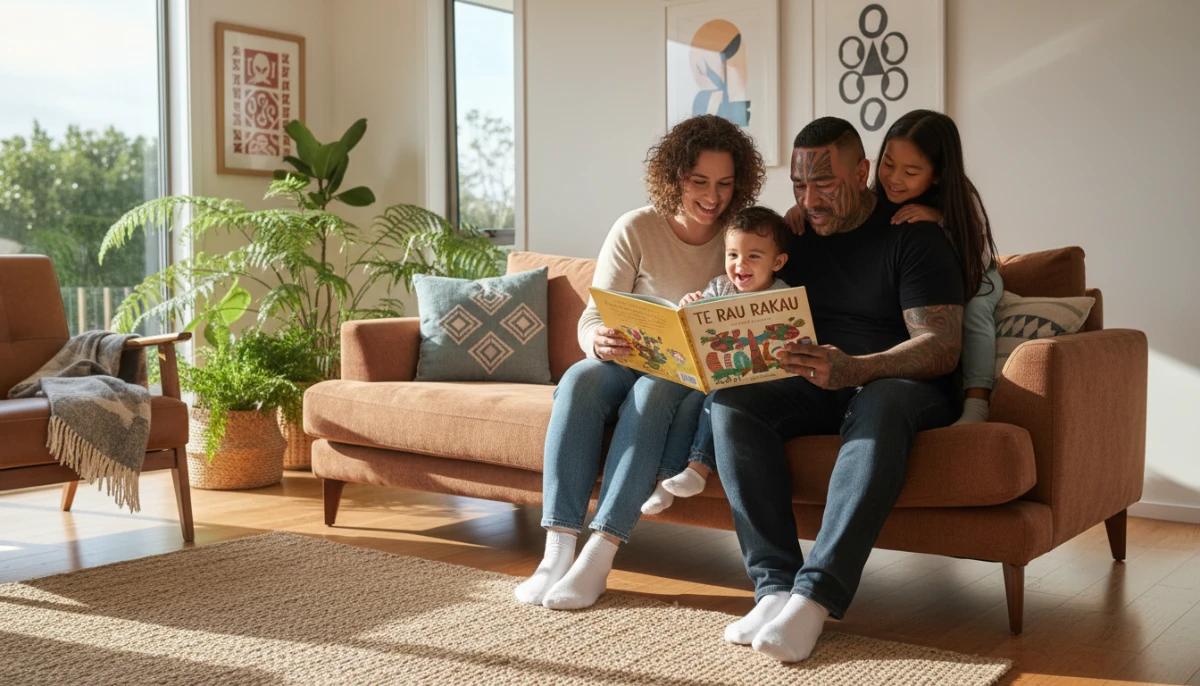
Research shows that children exposed to multiple languages early on develop enhanced cognitive flexibility. In New Zealand, this also fosters a deep sense of Tūrangawaewae—a place to stand.
“Language is the lifeblood of culture. When it is spoken in the home, the culture lives and breathes through the next generation.”
— Kaiako Māori Expert
- Strengthens the bond between tamariki and their heritage.
- Normalises biculturalism in a modern Aotearoa context.
- Builds a foundation for future success in the NZ education system.
Getting Started: Simple Daily Phrases
You do not need to be a fluent speaker to begin. The key to successful integration is consistency. Start by replacing common English greetings and commands with their Māori equivalents.
Morning routines are the perfect time to introduce new vocabulary. Instead of saying “Good morning,” try “Mōrena.” Instead of “Breakfast is ready,” use “Kua rite te parakuihi.”
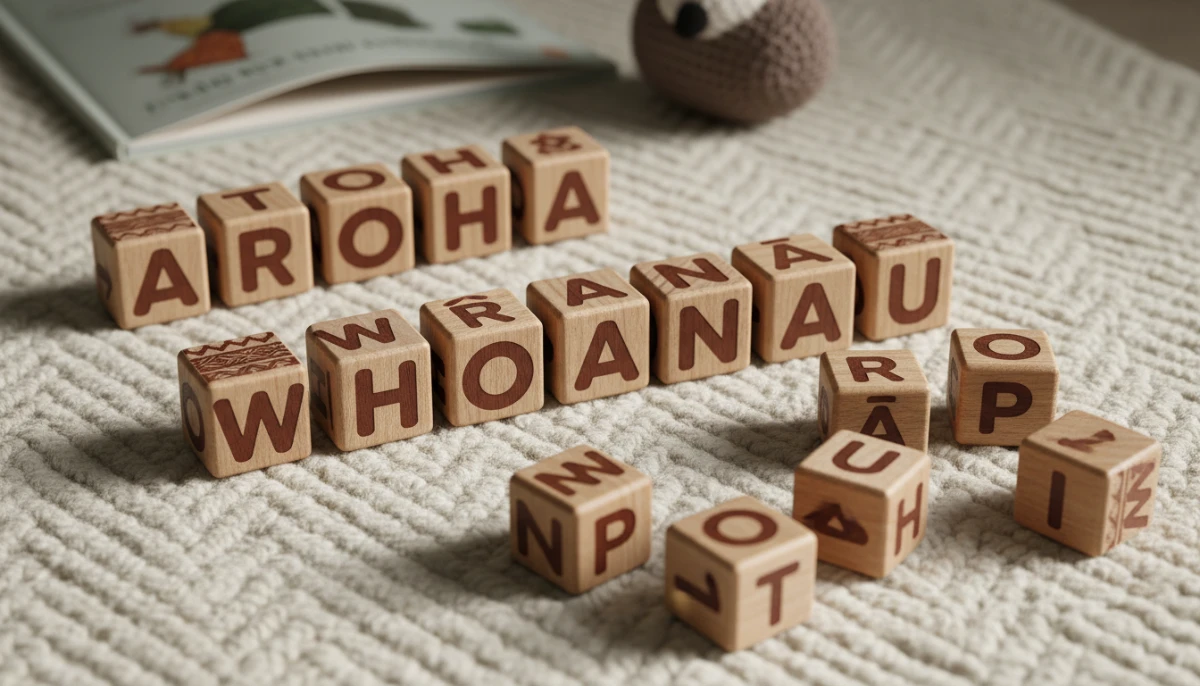
Using labels around the house can also reinforce learning. Place small stickers on the ‘pouaka whakaata’ (TV), ‘tatau’ (door), and ‘tēpu’ (table) to help everyone in the whānau memorise nouns.
- Kia pai tō rā: Have a great day.
- Haere mai ki te kai: Come and eat.
- Kua reri koe?: Are you ready?
- E noho ra: Goodbye (to someone staying).
Applying Tikanga in the Whare
Tikanga refers to the correct way of doing things according to Māori custom. In a parenting context, this involves teaching values like Manaakitanga (care/hospitality) and Kaitiakitanga (guardianship).
One simple way to introduce tikanga is through the practice of Karakia (incantations/prayers) before meals. This acknowledges the food and the effort taken to provide it, grounding the family in gratitude.

Respecting the head (te upoko) as tapu (sacred) is another common practice. Teaching children not to step over people or touch heads unnecessarily reinforces boundaries and personal space from a cultural perspective.
Furthermore, the concept of Whanaungatanga—building and maintaining relationships—is vital. Encouraging your children to know their Pepeha (introduction) helps them understand their place in the wider world.
High-Utility Resources for NZ Parents
Navigating the journey of bicultural parenting is easier with the right tools. New Zealand offers world-class resources to support your family’s growth.
The Ministry of Education provides extensive guides on early childhood language acquisition. Additionally, the Māori Language Commission offers free downloadable posters and audio guides.
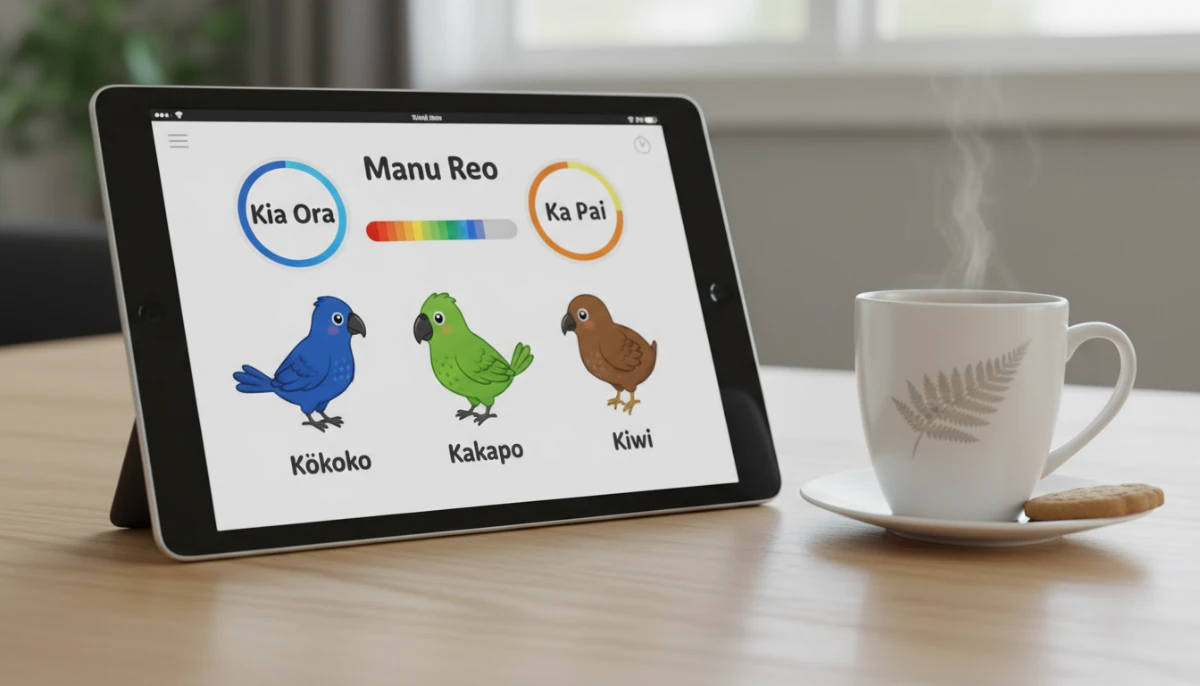
Local libraries are also fantastic hubs. Most NZ libraries host “Wā Pēpi” (Baby Time) sessions that include Māori songs and stories, providing a social environment for learning.
- Te Aka Māori Dictionary: The gold standard for translations.
- Tōku Reo: A great television series for beginners.
- Pipi Mā: The world’s first Māori speaking dolls and cartoons.
Overcoming Language Barriers as a Learner
Many parents feel a sense of ‘whakamā’ (shame or shyness) when they first start using te reo at home. It is important to remember that every small effort counts toward the survival of the language.
Focus on progress over perfection. Your children will not judge your pronunciation; they will mirror your enthusiasm. By being a learner alongside them, you model resilience and a growth mindset.
Engaging with your local Marae or joining a community te reo class can provide the support system needed to stay motivated. Remember, you are part of a national movement to revitalise the voice of Aotearoa.
“Whāia te iti kahurangi ki te tūohu koe me he maunga teitei.” (Seek the treasure you value most dearly: if you bow your head, let it be to a lofty mountain.)
Conclusion & Key Takeaways
Embracing te reo at home is a gift to your tamariki that will last a lifetime. It bridges the gap between the past and the future, ensuring that the unique culture of New Zealand continues to thrive in every household.
Key Takeaways for Whānau:
- Start Small: Use daily greetings and label household items.
- Be Consistent: Make te reo a natural part of every routine.
- Embrace Tikanga: Incorporate values like manaakitanga into parenting.
- Use Available Tools: Leverage apps, books, and government resources.
- Stay Positive: Focus on the journey and the connection it builds.