Symptoms of Dyslexia in Children: The Definitive NZ Guide
Recognising the symptoms of dyslexia in children is the foundational step toward securing the necessary healthcare and educational support required for neurodivergent learners within the New Zealand framework.
Understanding Symptoms of Dyslexia in Children
Dyslexia is a specific learning disability that is neurobiological in origin. It is characterized by difficulties with accurate and fluent word recognition and by poor spelling and decoding abilities. In the context of New Zealand’s unique educational landscape, which values inclusivity and biculturalism, understanding these challenges is vital for parents and educators alike. According to Wikipedia, dyslexia is the most common learning disability, affecting roughly 5-10% of the population.
The neurodiversity movement has shifted the focus from ‘fixing’ a child to providing the right environment for their brain to thrive. However, before intervention can begin, one must be able to articulate the specific symptoms of dyslexia in children to GPs, teachers, and specialists. These symptoms often present as a cluster of behaviors rather than a single indicator. Children with dyslexia often possess high levels of creativity, three-dimensional thinking, and problem-solving skills, which can sometimes mask their underlying literacy struggles.
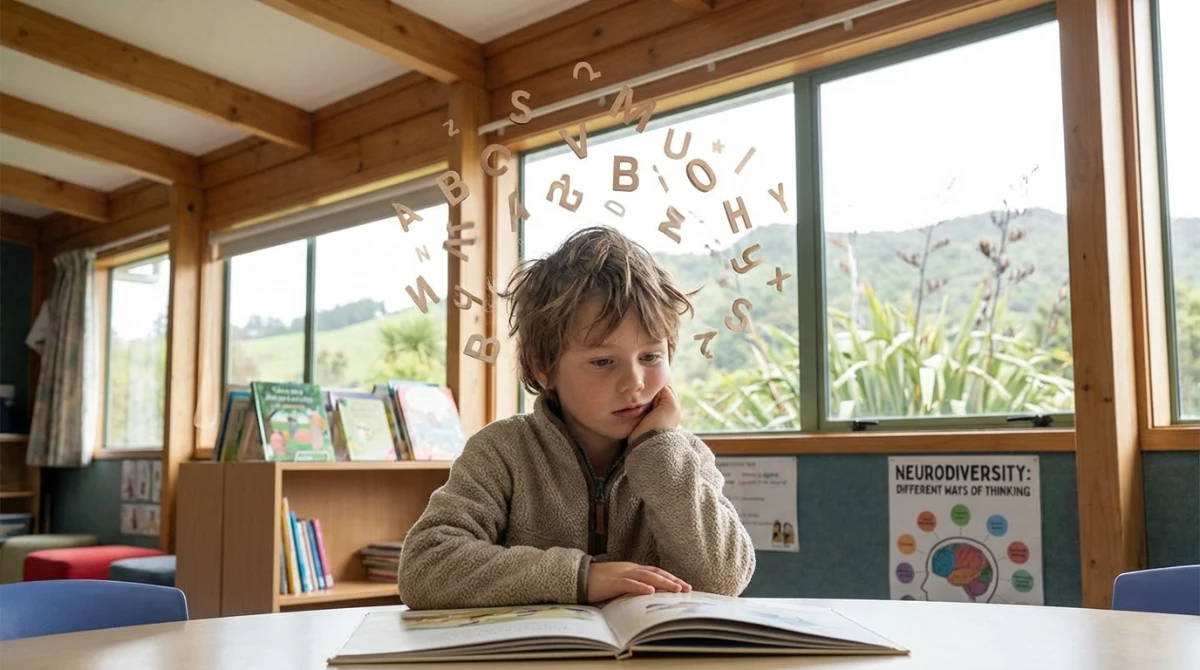
It is important to note that dyslexia is not a result of low intelligence, lack of motivation, or poor vision. Instead, it is related to how the brain processes phonemes—the smallest units of sound in language. When a child cannot map these sounds to written symbols (letters), the entire process of reading and writing becomes an exhausting, cognitively demanding task.
Identifying Early Symptoms of Dyslexia in Children
Early identification is the gold standard for neurodiverse outcomes. Even before a child enters a New Zealand primary school, there are subtle indicators that may suggest a predisposition to dyslexia. Many parents notice that their children reach verbal milestones differently than their peers.
In the preschool years, the symptoms of dyslexia in children may include:
- Delayed Speech: A significant delay in talking or difficulty pronouncing common words (e.g., saying ‘busgetti’ for spaghetti).
- Phonological Awareness Issues: Difficulty recognizing rhymes or failing to understand that words like ‘cat’ and ‘hat’ share a common sound.
- Letter Recognition: Persistent difficulty learning and naming the letters of the alphabet, even after repeated exposure.
- Difficulty Following Multi-Step Instructions: Trouble remembering a sequence of tasks (e.g., “Put your shoes on, get your bag, and wait by the door”).
- Rapid Naming: Slow retrieval of names for familiar objects, colors, or shapes.
Research from the Ministry of Education emphasizes that early intervention through speech and language therapy can mitigate some of the later academic frustrations. If these signs are present, parents are encouraged to discuss developmental milestones with their Plunket nurse or GP.

Primary School Indicators and Red Flags
As children move into the ‘Junior School’ (Years 1-3), the demands of literacy become the central focus of their education. This is typically when the symptoms of dyslexia in children become most visible to teachers and parents. The transition from ‘learning to read’ to ‘reading to learn’ is where the gap between dyslexic students and their peers often widens.
Reading and Decoding Challenges
Children may struggle with ‘sounding out’ simple words. They might rely heavily on guessing based on the first letter or the pictures on the page rather than using phonetic decoding skills. This lack of fluency means they spend so much mental energy decoding that they have little left for comprehension.
Writing and Spelling Difficulties
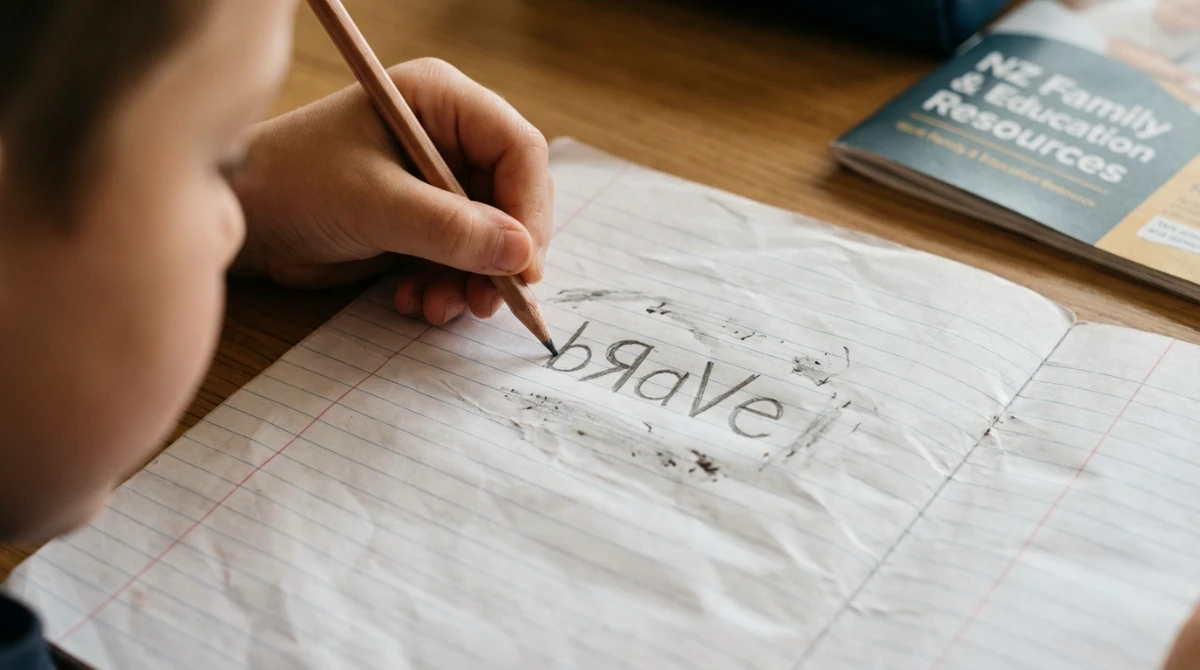
Spelling is often a major hurdle. A child might spell the same word three different ways in a single paragraph. Their writing may be brief, as they choose words they know how to spell rather than the more complex vocabulary they use in speech. Handwriting can also be a struggle, often involving incorrect grip or letter reversals (such as b/d or p/q) that persist past the age of seven.
The Emotional Impact
Beyond the academic markers, the emotional symptoms of dyslexia in children are equally critical. You may observe:
- School refusal or anxiety on Sunday nights.
- Low self-esteem and statements like “I’m stupid” or “I can’t do this.”
- Extreme fatigue after a school day due to the cognitive load.
- Physical symptoms like stomach aches or headaches before literacy tasks.
Secondary School and Beyond: Complex Symptoms
In the New Zealand secondary system (Years 9-13), the literacy load increases across all subjects, including Science and Mathematics. For a teenager, the symptoms of dyslexia in children may evolve into more sophisticated challenges. At this stage, students are expected to engage with NCEA (National Certificate of Educational Achievement) requirements, which demand significant written output.
Key indicators in older children include:
- Slow Reading Rate: Even if they can decode, they read much slower than their peers, making timed exams particularly difficult.
- Poor Note-Taking: An inability to listen and write simultaneously, leading to incomplete class notes.
- Discrepancy Between Verbal and Written Ability: The student can explain complex concepts verbally but fails to reflect that knowledge in an essay.
- Difficulty with Foreign Languages: Learning a second language often highlights the underlying phonological deficits of dyslexia.
- Time Management Issues: Struggles with organizing assignments, understanding deadlines, and breaking down large tasks into manageable steps.
For these students, Special Assessment Conditions (SACs) such as readers, writers, or extra time are essential. Organizations like SPELD NZ are instrumental in providing the formal assessments required by NZQA to grant these accommodations.

The NZ Educational Framework and Legal Rights
New Zealand law and educational policy have come a long way in recognizing neurodiversity. The Education and Training Act 2020 mandates that every school must be inclusive and responsive to the needs of all learners. If you have identified the symptoms of dyslexia in children, it is your right to request support.
Within the school, the Learning Support Coordinator (LSC) or Special Education Needs Coordinator (SENCO) is your primary point of contact. They can facilitate access to the RTLB (Resource Teacher: Learning and Behaviour) service. The RTLB works alongside teachers to adapt the curriculum and implement evidence-based strategies like the ‘Structured Literacy’ approach, which has been shown to be highly effective for dyslexic learners.
Commonly utilized LSI entities in the NZ system include:
- Individual Education Plan (IEP).
- Universal Design for Learning (UDL).
- Tiered Support Systems.
- The Dyslexia Foundation of New Zealand.
- Inclusive Education guidelines.

Pathways to Assessment and Diagnosis
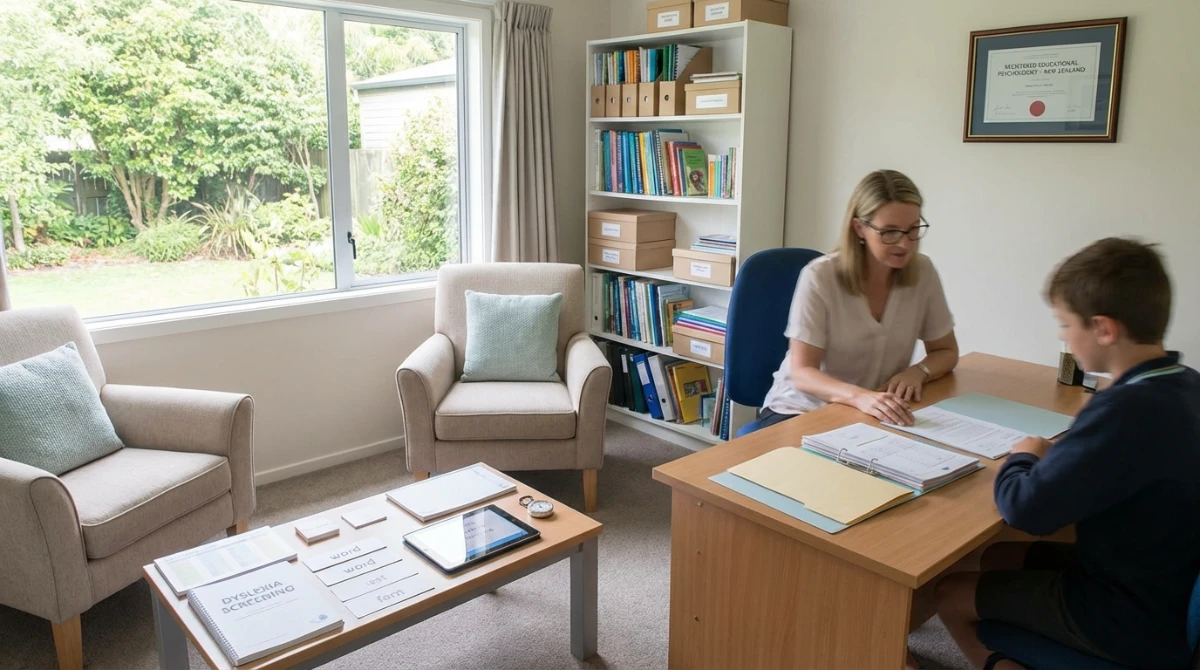
While a teacher can identify the symptoms of dyslexia in children, a formal diagnosis requires a comprehensive assessment. In New Zealand, this can be done through several channels:
- Private Educational Psychologists: These professionals provide a deep dive into cognitive processing, working memory, and phonological processing. While more expensive, they offer the most detailed reports.
- SPELD NZ Assessors: Specialized assessors who focus specifically on specific learning disabilities (SLD).
- Ministry of Education: In some cases, for children with high-level needs, the Ministry may provide support, though they often focus on the ‘impact’ on learning rather than a specific ‘label.’
A typical assessment involves testing IQ (to show the discrepancy between ability and achievement), phonological processing speed, rapid naming, and academic skills in reading, writing, and spelling. Understanding the profile of your child’s brain is not about finding what is “broken,” but about understanding how they learn best.
Conclusion
Navigating the symptoms of dyslexia in children is a journey that requires patience, advocacy, and a deep understanding of the New Zealand educational and healthcare landscape. While the challenges of dyslexia are real, they are far from insurmountable. With early identification, evidence-based instruction (such as Structured Literacy), and emotional support, children with dyslexia can—and do—excel in their chosen fields.
Key Takeaways
- Early Detection: Look for speech delays and difficulty with rhymes in the preschool years.
- Primary Focus: Monitor word decoding, spelling consistency, and school-related anxiety.
- NZ Support: Utilize LSCs and the RTLB service within the school system.
- Formal Diagnosis: Consider an educational psychologist for a detailed profile of learning strengths and weaknesses.
- Advocacy: Remember that children with dyslexia have a legal right to reasonable accommodations in New Zealand schools.
By shifting our perspective from a deficit-based model to one of neurodiversity, we can help our children view their dyslexia as a different way of thinking rather than a barrier to success. If you suspect your child is showing the symptoms of dyslexia in children, start the conversation with their teacher today. Your advocacy is the most powerful tool in their educational toolkit.