Employment Court for Unfair Dismissal
Est. Read Time: 12 mins | Last Updated: 22 December 2025 01:44 AM
Navigating the employment court for unfair dismissal in New Zealand requires a sophisticated understanding of the Employment Relations Act 2000 and the procedural rigour demanded by the judicial system to ensure that both employees and employers receive a fair and equitable hearing regarding the termination of a contract. This guide provides an exhaustive breakdown of how to challenge an unjustifiable dismissal, the transition from the Employment Relations Authority (ERA) to the Court, and the social support mechanisms available to those facing career upheaval.
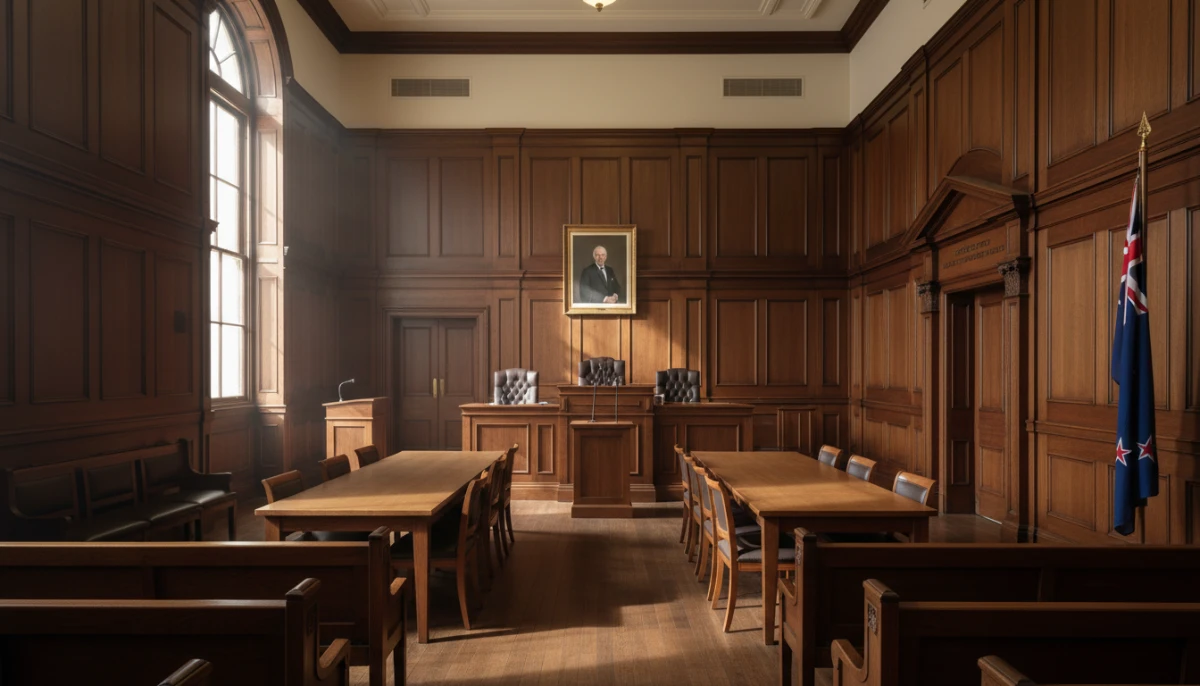
Employment Court for Unfair Dismissal: Judicial Context
The employment court for unfair dismissal serves as the secondary tier of the employment dispute resolution system in Aotearoa New Zealand. Unlike the Employment Relations Authority, which is an investigative body designed to resolve issues informally, the Court is a specialized judicial body that hears appeals or challenges to ERA determinations.
Under the Employment Relations Act 2000, a dismissal must be both substantively justified and procedurally fair. If an employer fails to provide a valid reason or fails to follow a fair process (such as a lack of warning or opportunity for the employee to respond), the dismissal is often deemed ‘unjustifiable’. The Court applies the ‘test of justification’ under Section 103A, asking whether the employer’s actions were what a fair and reasonable employer could have done in all the circumstances at the time.
“The Employment Court remains the final arbiter for complex legal interpretations regarding personal grievances, ensuring that the balance of power between worker and employer remains consistent with New Zealand’s social values.”
- Personal Grievance (PG) must be raised within 90 days of the dismissal.
- The ’90-day trial period’ rules apply strictly only to businesses with fewer than 20 employees as of 2024/2025 legislation.
- Constructive dismissal (where the employee is forced to resign) is also heard here.
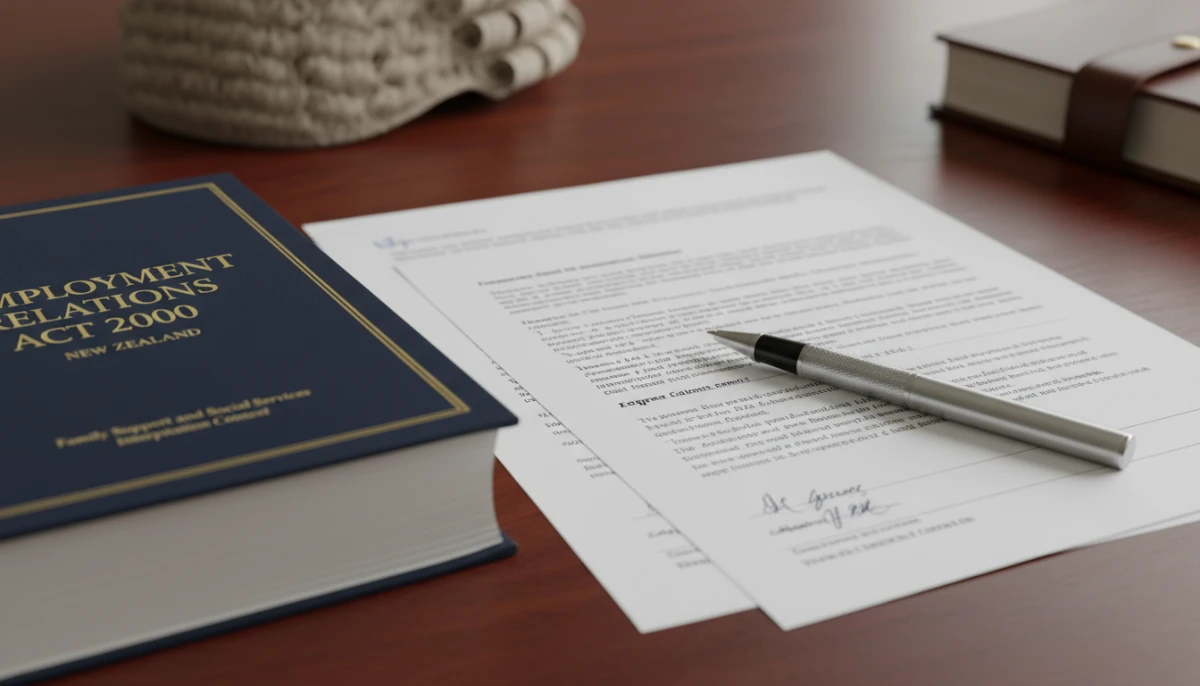
The Difference Between the ERA and the Employment Court
Understanding the hierarchy is vital. Most cases begin at the Employment Relations Authority. If a party is dissatisfied with the ERA’s decision, they can challenge it in the Employment Court. This is often a ‘de novo’ hearing, meaning the Court hears the case entirely fresh, without being bound by the ERA’s findings of fact.
The Court also handles matters of significant public interest or complex legal questions that the ERA may refer upward. This transition requires meticulous legal preparation, as the Court follows more formal rules of evidence than the Authority.
What is the process for taking a claim to the Employment Court for unfair dismissal?
The process begins with the filing of a Statement of Claim. This document outlines the legal grounds upon which you believe the dismissal was unfair. You must file this within 28 days of the ERA determination you are challenging. Once filed, the other party has a set timeframe to file a Statement of Defence.
Following the exchange of documents, a judge may call for a directions conference to set timelines for evidence exchange. Unlike the ERA, where the member takes an investigative lead, in the Court, the burden of proving the case rests heavily on the parties and their legal counsel. The hearing itself involves cross-examination of witnesses and formal legal submissions.
- Filing a Statement of Claim (Form 1).
- Service of documents to the defendant (the employer).
- Pre-hearing directions and disclosure of evidence.
- The formal hearing at one of the Court’s registries (Auckland, Wellington, or Christchurch).

How much does it cost to file an Employment Court claim in NZ?
Engaging with the employment court for unfair dismissal is more expensive than the ERA. The filing fee is approximately $200-$300, but the real costs lie in legal fees. Because the Court is a formal judicial environment, most parties require a barrister or a specialized employment lawyer. Fees can range from $3,000 to $30,000 depending on the case’s complexity.
Furthermore, the losing party is often ordered to pay ‘costs’ to the winning party. This is a contribution towards the winner’s legal fees, usually calculated based on a daily rate set by the Court. If you are an employee with limited means, you may need to apply for a waiver of fees or seek assistance from a Community Law Centre.
What remedies can the Employment Court award for unfair dismissal?
The primary remedy sought in the Court is often reinstatement—getting your job back. While the law states this should be the primary remedy, in practice, it is rarely awarded if the relationship has been irrevocably damaged. Instead, the Court frequently awards financial compensation.
Under Section 123 of the Act, the Court can award compensation for ‘humiliation, loss of dignity, and injury to the feelings of the employee’. In recent years, these ‘Bands’ of compensation have increased significantly, with Band 1 (minor) starting around $10,000 and Band 3 (severe) exceeding $50,000. Additionally, the Court can order the payment of lost wages, usually capped at what the employee would have earned from the date of dismissal until the hearing.
- Reinstatement to the former position.
- Reimbursement of lost wages (back pay).
- Compensation for emotional distress (Section 123(1)(c)).
- Recommendations to the employer to prevent future issues.

Conclusion
The employment court for unfair dismissal remains a vital pillar of justice in New Zealand. While the process is more formal and costly than the ERA, it offers a robust mechanism for those seeking to rectify a profound professional wrong. By understanding the ‘test of justification’ and preparing for the financial and emotional rigours of a hearing, employees can better navigate the path to a fair resolution.
Key Takeaways
- The Employment Court typically hears challenges to ERA determinations via ‘de novo’ hearings.
- Justification is based on both substantive reasons and procedural fairness.
- Financial remedies include lost wages and compensation for humiliation (Section 123).
- Legal costs are significant; losing parties may have to pay the other side’s costs.
- Holistic support via NZ social services is available for families affected by sudden job loss.
For official information, visit the Employment New Zealand website or the Ministry of Justice portal.
Family Support and Social Services Interpretation
In the New Zealand market, the impact of an unfair dismissal goes beyond the individual; it affects the entire whānau. Interpretation of social services often intersects with employment law when a dismissal leads to financial hardship or mental health crises. Organizations like Work and Income (WINZ) and various family support NGOs provide critical bridges during the period a case is pending in the Employment Court.
Navigating these services requires a clear interpretation of one’s rights. For instance, if you are involved in an ongoing legal claim, it may affect your eligibility for certain benefits or require specialized advocacy from social workers. Understanding the synergy between the Ministry of Business, Innovation and Employment (MBIE) and the Ministry of Social Development (MSD) is essential for holistic recovery after a job loss.