Accessing Emergency Food Support and Food Banks: How to Find Food Bank Near Me
Est. Read Time: 12 mins | Last Updated: 22 December 2025 12:19 AM
If you are struggling to put meals on the table today, knowing how to find food bank near me is the first step toward securing immediate nutritional assistance through local New Zealand charities, the Ministry of Social Development (MSD), and community-led Pātaka Kai initiatives. To find a food bank near you in New Zealand, you should first check the Family Services Directory, contact the Salvation Army Foodbank, or log into MyMSD to apply for an emergency food grant that can be used at most major supermarkets.
Food insecurity is a reality for many Kiwi families facing rising costs of living. Whether you are in Auckland, Christchurch, or a rural township, the network of support is designed to ensure no one goes hungry. This guide provides a comprehensive roadmap to navigating the system effectively.
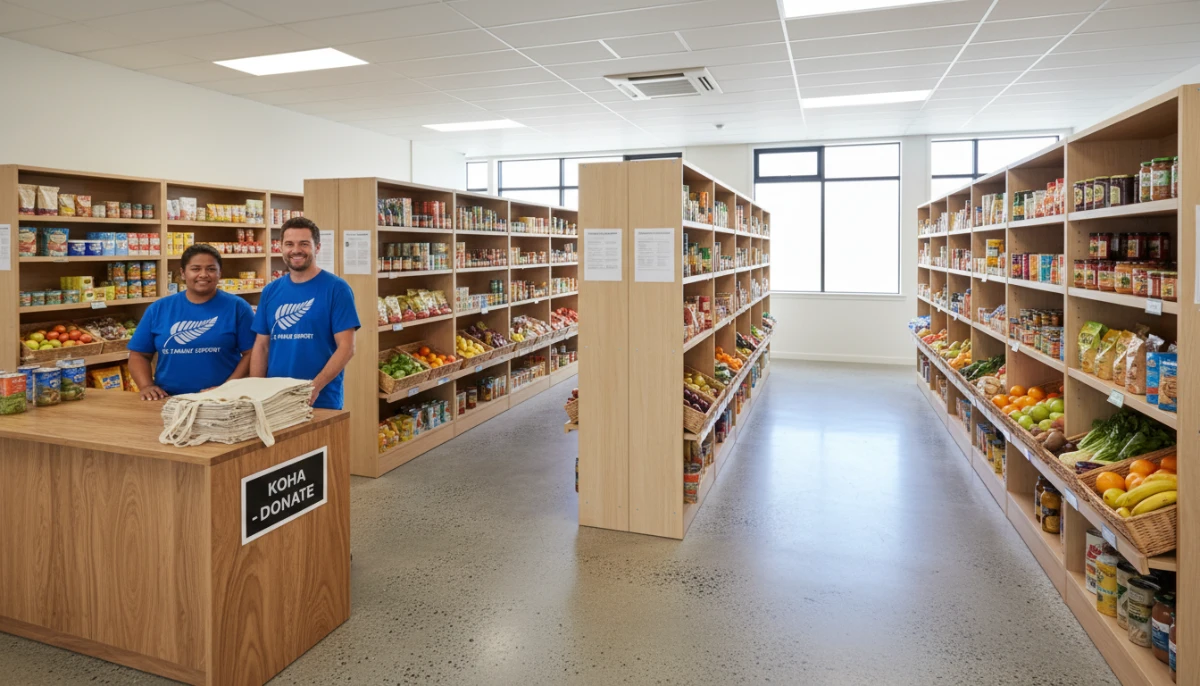
Find Food Bank Near Me: Your Step-by-Step Guide
When searching for local assistance, the digital landscape offers several quick tools. The first port of call is usually the Family Services Directory, which allows you to filter by region and service type. This tool lists hundreds of NGOs dedicated to food rescue and distribution.
Additionally, Google Maps is a powerful ally. Simply typing the phrase into your search bar will reveal operating hours and contact details for nearby missions. Always call ahead, as many locations require a brief phone assessment before you arrive.
- Check the Salvation Army’s official website for their ‘Food Assistance’ portal.
- Use the ‘0800 Hungry’ service if you are located in the Canterbury region.
- Visit the NZ Food Network website to find regional distribution hubs.
It is important to remember that most food banks operate during standard business hours, though some emergency services provide after-hours support for families in crisis. Don’t wait until your cupboard is completely bare before reaching out.
What qualifies you for emergency food support in New Zealand?
In New Zealand, the criteria for food assistance depend on whether you are seeking government help or community help. To qualify for a Special Needs Grant through Work and Income (WINZ), you typically need to show that you have an immediate need and no other way to pay for it.
Community food banks have different standards. Some may ask for a proof of address or a referral letter from a social worker, while others operate on a ‘trust-based’ model where your presence and request are sufficient evidence of need.
“Food is a basic human right. In New Zealand, our social safety net is designed to catch those who fall into temporary hardship, ensuring that children and vulnerable adults have access to balanced nutrition regardless of their bank balance.” – Senior Advocacy Officer
Common qualifying situations include unexpected medical bills, car repairs that take away from the grocery budget, or a delay in benefit payments. Most providers will not turn you away if you are in genuine distress, but they may limit the frequency of parcels to ensure resources are shared fairly.
How can I apply for a WINZ food grant today?
The Ministry of Social Development (MSD) provides ‘Food Grants’ which are part of the Special Needs Grant framework. You do not necessarily have to be on a benefit to qualify, though income and asset limits do apply. This is a non-recoverable payment, meaning you don’t have to pay it back.
To apply, log in to MyMSD. The automated system will ask a series of questions about your income, expenses, and the reason you need help. If approved, the money is loaded onto your Community Services Card (CSC) or a dedicated payment card almost instantly.
- Ensure your bank account details are up to date in the MyMSD portal.
- Have a digital copy of your latest bank statement ready in case of an audit.
- Be prepared to explain why your current funds were exhausted (e.g., higher power bills).
If you cannot use the online portal, you can call 0800 559 009. Wait times can be long during peak morning hours, so calling mid-afternoon is often more efficient. Remember that you are usually limited to a certain number of food grants per year before a formal interview with a case manager is required.

The Salvation Army and Major Providers
The Salvation Army is perhaps the most well-known provider of food parcels in New Zealand. They operate ‘Community Ministries’ centres across the country. Their approach often involves more than just food; they offer financial mentoring and advocacy to help address the root causes of the hardship.
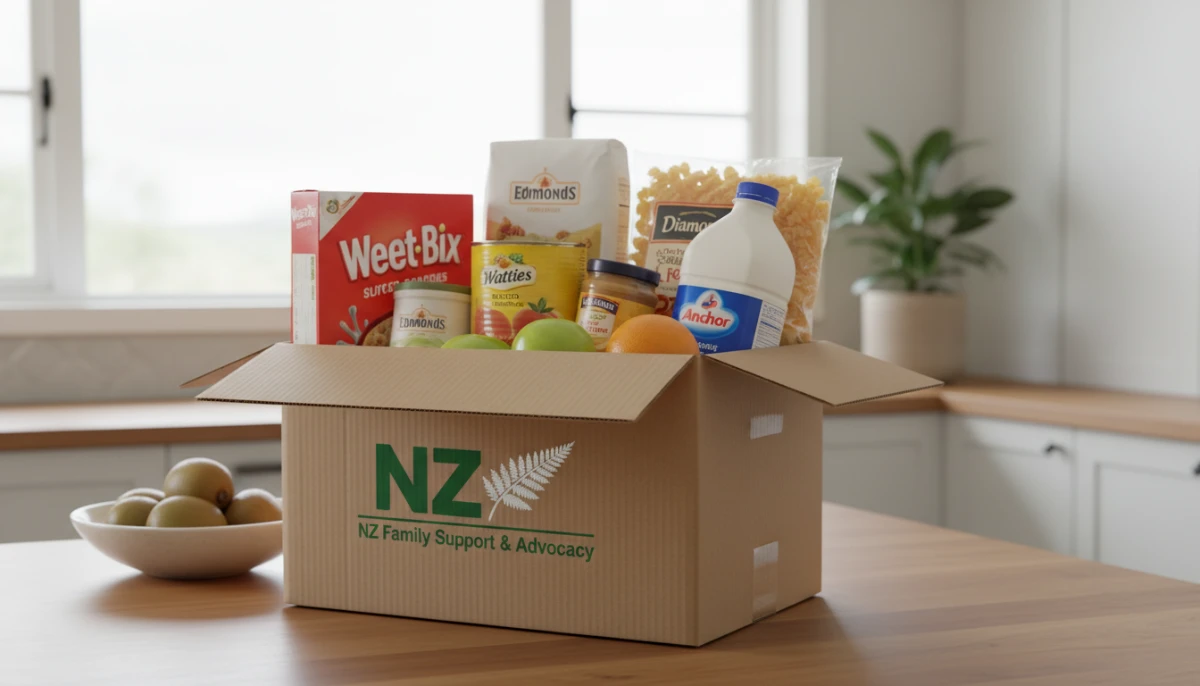
When you visit a Salvation Army food bank, you will likely meet with a caseworker. They will provide a food parcel designed to last a family for three to four days. These parcels include staples like flour, rice, canned proteins, and where available, fresh bread and milk.
Other major providers include the St Vincent de Paul Society (Vinnies) and various City Missions in Auckland, Wellington, and Christchurch. These organisations often have ‘Social Supermarkets’ where you can ‘shop’ for the items you need using a points system, providing a more dignified experience than receiving a pre-packed box.
Pātaka Kai: The Open Pantry Movement
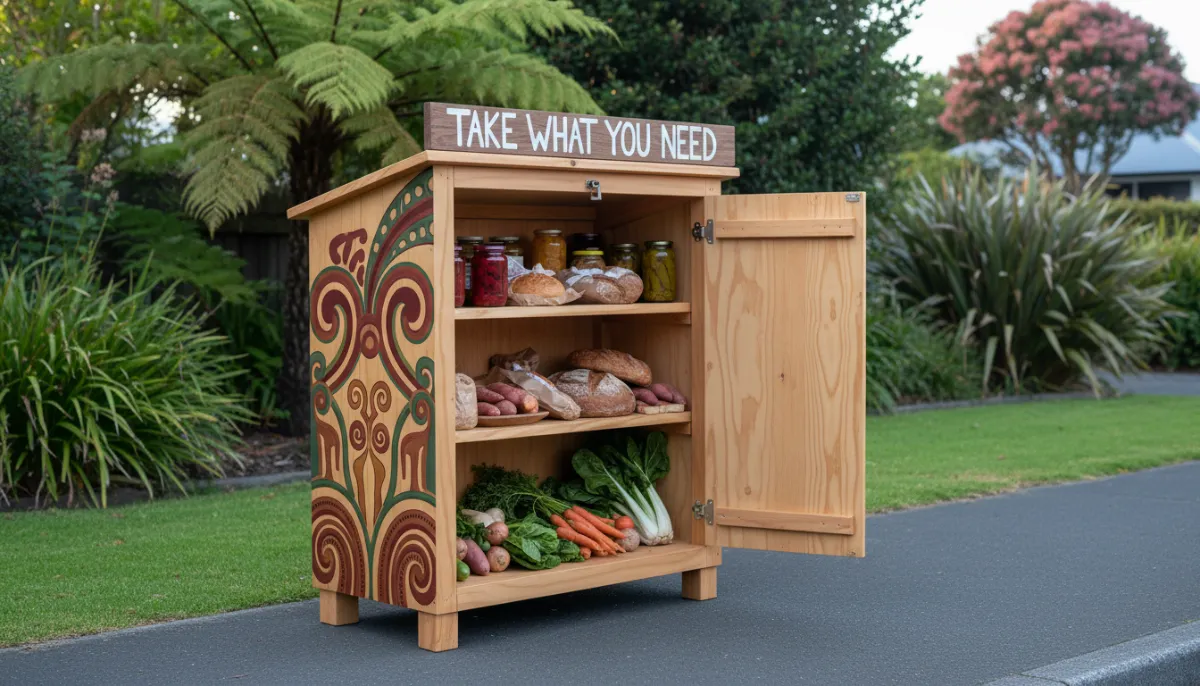
Pātaka Kai is a grassroots, indigenous-led movement based on the concept of ‘sharing sheds.’ These are physical pantries located on street corners or outside community centres where anyone can leave food and anyone can take food. There are no forms to fill out and no questions asked.
The philosophy is simple: ‘Take what you need, give what you can.’ This is an excellent resource for those who might feel stigmatised by formal processes or who only need a few items to get through to payday. You can find a map of these pantries on the official Pātaka Kai Open Street Map.
- Look for the distinctive wooden pantry boxes in your local neighbourhood.
- Check for ‘Community Fruit Trees’ in your area that are part of this network.
- Join local ‘Free Food’ Facebook groups which often coordinate these locations.
While Pātaka Kai are great for staples and seasonal produce, they are reliant on community donations, so the stock levels can vary daily. They are a supplement to, rather than a replacement for, the larger food bank networks.
Are there food banks that don’t require a referral?
Yes, several organisations operate with a low-barrier entry. While WINZ and the Salvation Army often prefer a referral or an assessment, many local church groups and ‘food rescue’ organisations like KiwiHarvest or Kaivolution partner with local hubs to distribute food without red tape.
Sikh Gurdwaras across New Zealand also offer ‘Langar’ (free community kitchen meals) to anyone, regardless of faith or background. These are hot, nutritious vegetarian meals available daily. Similarly, many Hare Krishna centres offer affordable or free ‘Food for Life’ meals.
In smaller towns, the local community centre is usually the best place to ask. They often have informal networks that can provide a grocery voucher or a bag of supplies without the need for a formal referral process.
Conclusion & Key Takeaways
Navigating food insecurity in New Zealand can be overwhelming, but the resources are available to help you and your whānau. From government-funded Special Needs Grants to the community spirit of Pātaka Kai, the goal is to ensure that no one in our ‘team of five million’ goes without the basics.
If you find yourself in a position of need, don’t hesitate to reach out. These services exist specifically for these moments of hardship. Start by checking your eligibility for a WINZ grant, then look toward the incredible NGOs and community pantries in your specific suburb.
Key Takeaways
- Start Online: Use MyMSD for immediate government food grants.
- Contact the Experts: The Salvation Army and City Missions offer comprehensive support beyond just food.
- Low Barrier Options: Pātaka Kai and Sikh Gurdwaras provide food without requiring referrals.
- Call Ahead: Always phone local food banks first to confirm hours and requirements.
- Be Prepared: Have your ID and a basic summary of your financial situation ready for formal assessments.