Educational Rights & Transitions: Understanding NZ School Enrollment Rights
Navigating the complexities of the New Zealand education system requires a thorough understanding of nz school enrollment rights and the legal frameworks that ensure every child has access to quality learning. Whether you are moving house, transitioning from early childhood education to primary school, or managing a child with specific healthcare and learning needs, knowing the statutory protections provided by the New Zealand government is essential. This guide serves as a high-authority resource for parents, guardians, and educators to understand their entitlements and responsibilities within the Aotearoa educational landscape.
Table of Contents
- The Foundation of NZ School Enrollment Rights
- Legal Frameworks and NZ School Enrollment Rights
- Enrolment Schemes and Zoning Laws
- Inclusive Education and Special Education Needs (SEN)
- Healthcare and Wellbeing in the School Environment
- Transitions: ECE to Secondary and Beyond
- Disputes, Appeals, and Resolution Strategies
- Conclusion and Key Takeaways
The Foundation of NZ School Enrollment Rights
In New Zealand, the right to education is a fundamental pillar of social equity. Every child who is a New Zealand citizen or a permanent resident is entitled to free primary and secondary education. This entitlement begins on their fifth birthday and continues until the 1st of January after their 19th birthday. Understanding nz school enrollment rights means recognizing that state schools are funded to provide this education without charging tuition fees, although voluntary donations and specific course-related costs may exist.

The system is designed to be inclusive, ensuring that geographic location, socioeconomic status, or physical and cognitive abilities do not serve as barriers to entry. According to the Wikipedia overview of Education in New Zealand, the system is governed by a decentralized model where individual school boards of trustees have significant autonomy, yet they must operate within strict national guidelines regarding enrollment and student rights.
Legal Frameworks and NZ School Enrollment Rights
The primary legislation governing nz school enrollment rights is the Education and Training Act 2020. This Act consolidated previous laws and strengthened the focus on student wellbeing and inclusive practices. Under this Act, it is a legal requirement for parents to ensure their children are enrolled in and attending school from the age of 6 until 16.
Key statutory elements include:
- The Right to Attendance: Once enrolled, a student has the right to attend the school during all hours that the school is open for instruction, unless they are subject to a legal stand-down or suspension.
- Non-Discrimination: Schools are prohibited from refusing enrollment based on race, religion, gender, or disability.
- Privacy Protections: Schools must handle student information in accordance with the Privacy Act 2020, ensuring that sensitive healthcare or family law data is kept confidential.
- The Equity Index: The transition from the old decile system to the Equity Index helps the Ministry of Education allocate funding more fairly, ensuring schools in higher-need areas are better equipped to support their students’ enrollment rights.
Enrolment Schemes and Zoning Laws
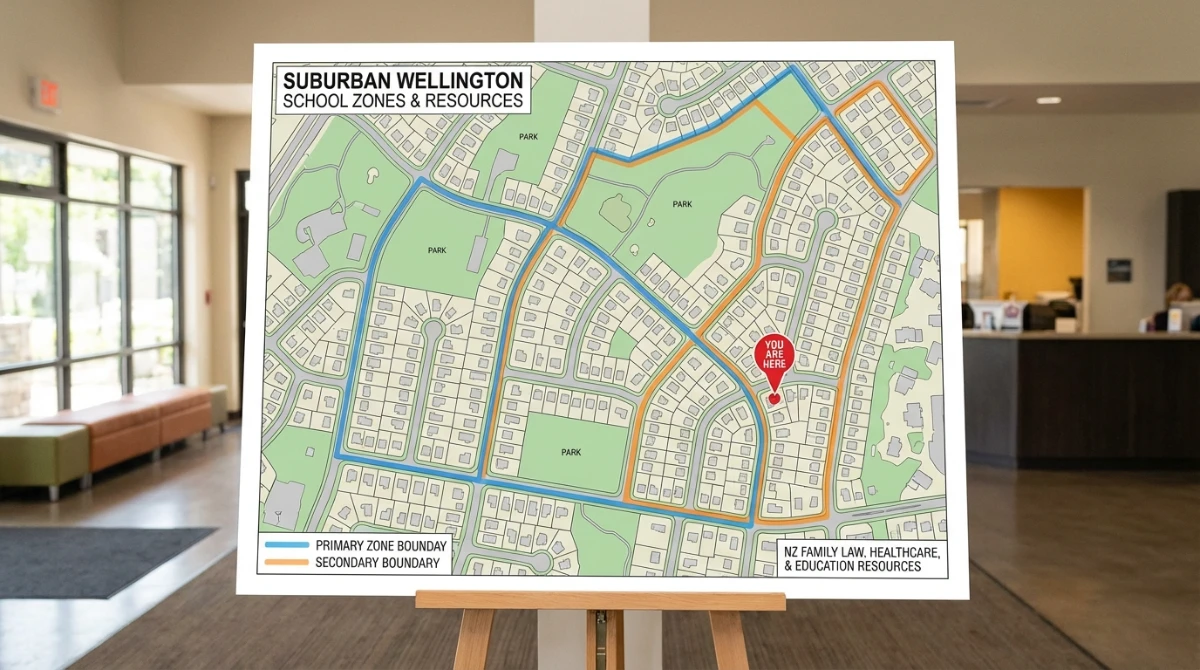
To manage school populations and prevent overcrowding, many New Zealand schools operate under an enrolment scheme, commonly known as a “zone.” Understanding how these zones affect nz school enrollment rights is critical for families when choosing a place of residence.
In-Zone vs. Out-of-Zone
If you live within the defined geographic boundary of a school, your child has an absolute right to enroll at that school. The school cannot refuse entry to an in-zone student. For those living outside the zone, the process is more complex. Schools must follow a strictly regulated ballot system for out-of-zone places, prioritized in the following order:
- Students accepted for special programs (e.g., Māori immersion).
- Siblings of current students.
- Siblings of former students.
- Children of former students.
- Children of board employees or board members.
- All other students (general ballot).
It is important to note that providing false information about a residential address to secure an in-zone place is a serious matter and can lead to the annulment of the enrollment even after the child has started school.
Inclusive Education and Special Education Needs (SEN)
Inclusive education is a core tenet of the New Zealand curriculum. The law specifies that students with special educational needs have the same rights to enroll and receive education at state schools as students without such needs. This is a vital component of nz school enrollment rights.

For students requiring significant support, several mechanisms are in place:
- Ongoing Resourcing Scheme (ORS): This provides funding for students with the highest levels of need for special education to help them join in and learn alongside their peers.
- RTLB Service: Resource Teachers: Learning and Behaviour (RTLB) work with schools to support students who are struggling with learning or behavior.
- Section 37 (formerly Section 9): In rare cases, a student may be enrolled in a specialist school through an agreement with the Ministry. This is not a restriction of rights but a specialized fulfillment of the right to an appropriate education.
- Assistive Technology: Students have the right to apply for specialized equipment (e.g., braille machines, specialized software) funded by the Ministry to ensure their enrollment is meaningful.
Healthcare and Wellbeing in the School Environment
Enrollment rights extend beyond the classroom into the physical and mental wellbeing of the student. New Zealand schools often act as a hub for healthcare services, particularly in lower-equity areas. The Ministry of Education (MoE) collaborates with Te Whatu Ora (Health NZ) to provide essential services.
Key healthcare integrations include:
- Public Health Nurses: Many schools have access to nurses who visit regularly to conduct vision and hearing screenings, immunization checks, and general health assessments.
- Mental Health Support: The ‘Counsellors in Schools’ initiative provides students with professional support to manage anxiety, trauma, or social challenges that might otherwise impede their education.
- Mana Ake: In certain regions, this program provides early intervention for children in years 1-8 to support mental health and wellbeing.
- Dental Services: Free dental care is provided to all New Zealand children from birth until their 18th birthday, often via mobile clinics that visit schools.
Transitions: ECE to Secondary and Beyond
The New Zealand education journey is marked by several key transitions. Maintaining nz school enrollment rights during these periods requires proactive planning. Transitions are not merely administrative; they are social and developmental milestones that the Ministry of Education views as critical for long-term success.

ECE to Primary (The First Step)
Most children start school at age five. Some schools use “Cohort Entry,” where children start in groups at the beginning of a term rather than on their actual birthday. Parents should check with their local school to see if they follow this policy, as it affects the timing of enrollment. Early Childhood Education (ECE) providers often work with primary schools to share information (with parental consent) to ease this transition.
Intermediate to Secondary
Moving from Year 8 to Year 9 (High School) involves selecting a school that aligns with the student’s academic, sporting, and cultural interests. At this stage, nz school enrollment rights are often tested by zoning restrictions. It is recommended that families attend open evenings and check the enrollment deadlines for their preferred secondary schools, which usually occur in August or September of the preceding year.
Disputes, Appeals, and Resolution Strategies
Despite the clear legal protections, disputes regarding nz school enrollment rights can occur. Whether it is a disagreement over a zoning boundary, a refusal of enrollment based on a misunderstanding of a disability, or a conflict regarding school fees, there are formal pathways for resolution.
The process generally follows these steps:
- Direct Communication: Most issues can be resolved by speaking directly with the school principal.
- Board of Trustees: If the principal cannot resolve the issue, a formal written complaint can be made to the Board of Trustees, who have the legal responsibility for the school’s governance.
- Ministry of Education: If the Board cannot resolve the matter, parents can contact the local Ministry of Education office for mediation or guidance.
- Ombudsman: For administrative grievances, the Office of the Ombudsman can investigate the fairness of a school board’s decision.
- Human Rights Commission: If the dispute involves discrimination, the Human Rights Commission is the appropriate body for lodging a complaint.
Conclusion and Key Takeaways
Understanding nz school enrollment rights is about more than just filling out forms; it is about ensuring that every child in New Zealand has the opportunity to thrive in a safe, inclusive, and legally protected environment. From the robust protections of the Education and Training Act 2020 to the practicalities of school zoning and the integration of healthcare services, the system is designed to support families through every transition. By staying informed and engaged with school communities, parents can ensure their children receive the full benefit of the New Zealand educational experience.
Key Takeaways for NZ Families:
- Right to Free Education: All citizens and residents aged 5-19 are entitled to free education at state schools.
- Zoning is Binding: Living in-zone guarantees a place; out-of-zone requires a successful ballot application.
- Inclusivity is Legal: Schools cannot refuse enrollment based on disability or special needs.
- Documentation Matters: Keep birth certificates, proof of address, and immunization records ready for enrollment.
- Wellbeing is Integrated: Healthcare and mental health supports are increasingly available through school networks.
- Advocacy Pathways: There are clear legal channels (Board, MoE, Ombudsman) to resolve enrollment disputes.

For more detailed information or to check specific zoning boundaries, visit the official Education Counts website or contact your local Ministry of Education regional office. Your child’s educational journey is protected by law, ensuring a bright future for all learners in Aotearoa.