Finding a JP in My Suburb: The Definitive Guide for NZ Families
Est. Read Time: 20 mins | Last Updated: 24 May 2024
If you have ever found yourself needing to find a justice of the peace to witness a statutory declaration or certify legal documents for family support services, you are participating in a tradition of community service that dates back centuries. In New Zealand, a Justice of the Peace (JP) is more than just a person who signs papers; they are individuals of high standing, nominated by their local Member of Parliament and appointed by the Governor-General, who provide vital legal services to the public free of charge.
For New Zealand families, the availability of a JP is essential for the smooth operation of daily life and social services interpretation. Whether you are applying for a Housing New Zealand grant, settling a Work and Income (WINZ) matter, processing citizenship applications, or finalizing a dissolution of marriage, the JP provides a free, legally-binding service that ensures your documentation is recognized by government departments and the courts. This guide serves as an exhaustive resource to help you navigate the process of locating, preparing for, and utilizing a JP in your local suburb.
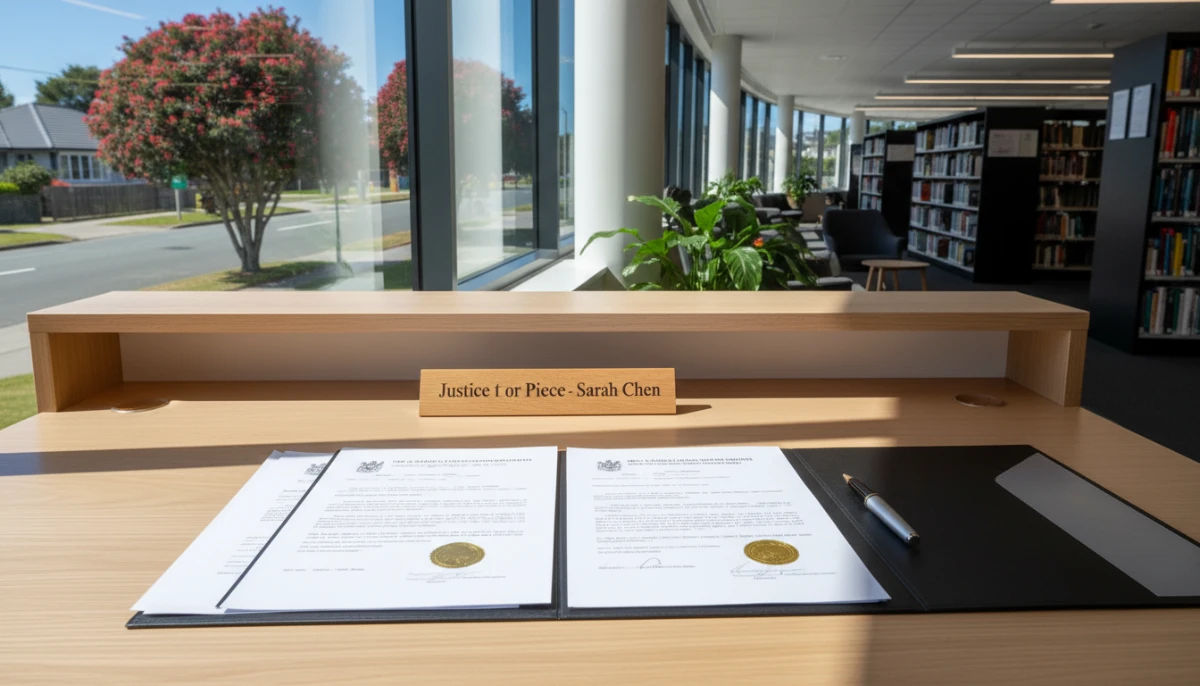
How to Find a Justice of the Peace Near You
When you need to find a justice of the peace, the most reliable and efficient method is to utilize the national database. The Royal Federation of New Zealand Justices’ Associations maintains a comprehensive, real-time directory of every active JP in the country. This directory is the gold standard for locating a volunteer within your immediate vicinity.
Using the Royal Federation Database
The online search tool at jp.org.nz is the primary digital gateway for New Zealanders. This platform allows you to search by name, suburb, city, or postcode. When you search for a JP in your suburb, the database provides:
- Contact Details: Both landline and mobile numbers where the JP can be reached.
- Availability: Specific hours or days the JP is available to see the public.
- Specializations: Whether they are authorized for specific duties or speak multiple languages.
It is important to remember that most JPs are retirees or professionals who offer their time around their own schedules. While some may accept walk-ins at their homes (if indicated in the registry), it is standard protocol—and a courtesy—to call ahead and arrange a time that suits both parties.
Service Desks vs. Private Visits: Which is Better?
For most New Zealand families, the choice between visiting a JP at their home and visiting a community “Service Desk” depends on convenience and the complexity of the task.
The Rise of the JP Service Desk
Service desks are increasingly popular because they operate on a walk-in basis, meaning you do not need to call ahead. These are typically located in high-traffic, accessible areas. The advantages of using a service desk include:
- No Appointments Needed: Simply show up during the rostered hours.
- Neutral Environment: Many people feel more comfortable in a public library or mall than at a private residence.
- Multiple JPs: Sometimes desks are staffed by multiple JPs, which can speed up the process if you have many documents.
When to Choose a Private Visit
A private visit might be more appropriate if you have a very large volume of documents (e.g., more than 10 certified copies) or if you have a sensitive legal matter that requires a quiet environment. Always check the JP’s listing on the database to see if they specifically invite home visits.
Regional Guide: Finding JPs in Major NZ Hubs
The concentration of JPs varies across the country, but the infrastructure for finding them remains robust. Here is how to find a justice of the peace in the major metropolitan areas of Aotearoa.
Auckland: The Super City Network
In Auckland, the sheer size of the population means that JP service desks are ubiquitous. Key locations include the Botany Town Centre, St Lukes Mall, and the Albany Library. The Auckland JP Association manages a complex roster, ensuring that even in burgeoning suburbs like Silverdale or Westgate, a service desk is usually available within a 15-minute drive.
Wellington: The Capital’s Resources
In Wellington, the Johnsonville Library (Waitohi) serves as a major hub for the northern suburbs. For the CBD, the Citizens Advice Bureau on Manners Street is a frequent stop. Those in the Hutt Valley or Porirua can find consistent service at the Lower Hutt Court and the Porirua library system. Wellington JPs are often well-versed in government-specific forms due to the city’s role as the administrative heart of the country.
Christchurch and the South Island
In Christchurch, the Tūranga (central library) is the flagship location for JP services. The Upper Riccarton Library and the Shirley Library also host regular desks. For those in more rural South Island areas, such as Central Otago or the West Coast, the local Police Station or District Court often serves as the primary point of contact for finding a rostered JP.
Common JP Services for Families and Social Services
New Zealand families often interact with JPs during pivotal life transitions. Understanding what a JP can—and cannot—do is vital for social services interpretation and legal compliance.
1. Witnessing Signatures
This is the most common request. Whether it is a statutory declaration for a Kainga Ora application or an affidavit for the Family Court, the JP acts as an independent witness to ensure that you are who you say you are and that you are signing the document voluntarily.
2. Certifying Copies
When you need to provide a copy of a birth certificate, passport, or academic transcript to an agency, they will often require a “certified copy.” The JP compares the original document with the photocopy and stamps it to confirm it is a true and accurate reproduction. This is a critical step for school enrollments and bank account applications.
3. Affidavits and Sworn Statements
In legal proceedings, an affidavit is a written statement confirmed by oath or affirmation. JPs are authorized to administer these oaths. This is frequently required for matters involving the Ministry of Social Development (MSD) or when providing evidence in civil disputes.
4. Dissolution of Marriage (Divorce)
Applying for a divorce in New Zealand requires the signatures of the applicants to be witnessed by a JP or a Registrar of the Court. Given the sensitive nature of these documents, JPs are trained to handle these interactions with professionalism and discretion.
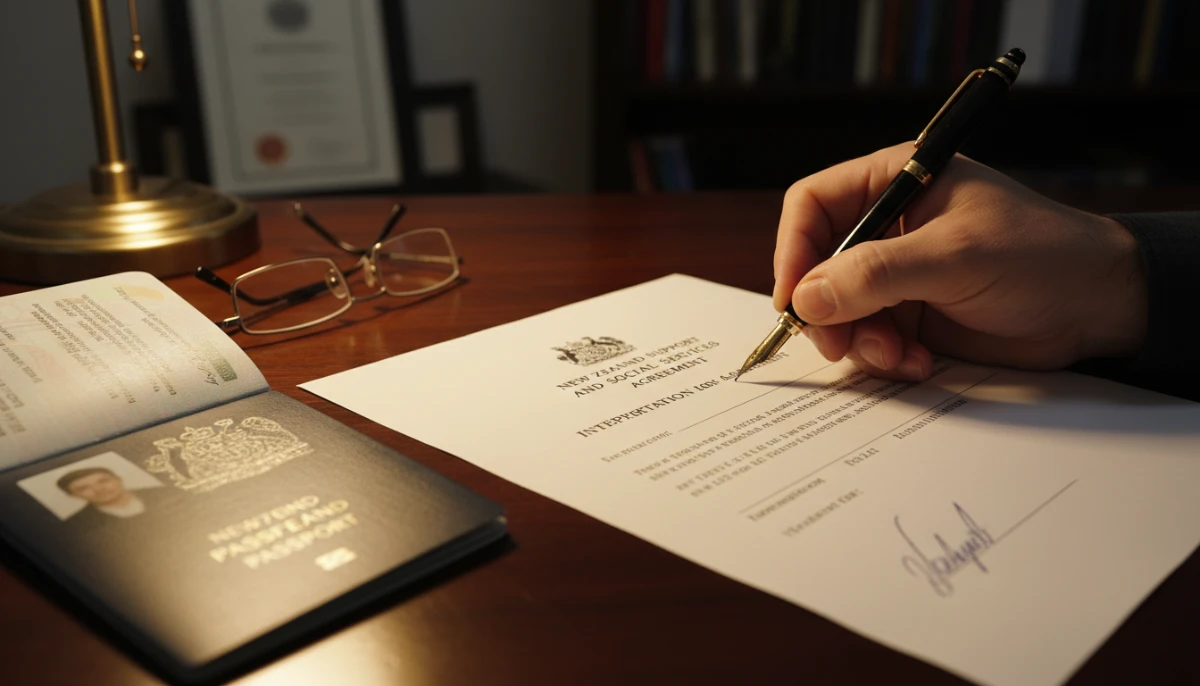
What to Prepare for Your Appointment: The Essential Checklist
Preparation is the key to a successful interaction with a JP. Because JPs are volunteers, it is important to respect their time by arriving with everything in order.
The “Must-Have” List
- Valid Photo Identification: You must bring your original NZ Driver License or Passport. A JP cannot witness your signature if they cannot verify your identity.
- The Original Document: If you need a copy certified, you must bring the original document. A JP cannot certify a photocopy of a photocopy.
- All Pages: Bring the entire document, even the pages that do not require a signature, to provide context if needed.
The “Never Do” List
- Do Not Sign Beforehand: This is the most common mistake. A JP must see you physically sign the document. If you have already signed it, they will ask you to print a fresh copy and sign it in their presence.
- Do Not Use Correction Fluid: If you make a mistake on a legal document, do not use White-Out. Instead, cross out the error, write the correct information, and both you and the JP will initial the change.

Electronic Signatures and Remote Witnessing Post-COVID
The landscape of legal witnessing changed during the COVID-19 pandemic. The New Zealand government introduced temporary measures that have, in some cases, become permanent through the Oaths and Declarations Act 1957 updates.
Remote witnessing via audio-visual link (AVL) is now possible for some documents. This involves the JP watching you sign the document over a video call (Zoom, Teams, or FaceTime). However, this is not a universal service. Many JPs still prefer physical meetings to ensure there is no duress and to accurately verify original documents. If you are housebound or in a remote area, search the JP database for those who specifically mention AVL services.
The Ethical Standards of a Justice of the Peace
Every JP in New Zealand must adhere to a strict Code of Ethics. This code ensures that the service remains impartial, confidential, and professional. JPs are prohibited from charging for their services and must not use their title for personal gain or to influence commercial outcomes. For families, this provides a layer of security—you know that the person assisting you is a vetted individual committed to the public good.
Frequently Asked Questions (FAQ)
How do I find a justice of the peace near me?
Is there a fee for JP services in New Zealand?
What identification do I need to bring?
Can a JP certify a copy of a digital document?
Can a JP witness my own family members’ documents?
Do I need an appointment for a service desk?
Conclusion
Finding a Justice of the Peace in your New Zealand suburb is a straightforward but essential task for managing legal and social administrative needs. By utilizing the jp.org.nz database and visiting established service desks in local libraries or Citizens Advice Bureaus, you can ensure your documents are processed accurately and for free. Preparation remains the most critical factor: ensure your ID is ready, keep your documents unsigned until you are in the presence of the JP, and always carry the originals for certification. As dedicated community volunteers, JPs uphold the integrity of the New Zealand legal system at the grassroots level, providing an invaluable service that ensures justice and administrative support remain accessible to every family, regardless of their financial circumstances.