Community Services & Health Subsidies
Est. Read Time: 12 mins | Last Updated: 22 December 2025 12:09 AM
Determining your eligibility for community services card benefits is the first step toward significant healthcare savings for New Zealand families and individuals. The Community Services Card (CSC) is a vital tool designed to reduce the cost of healthcare for low-to-middle-income earners by providing subsidies on prescriptions, GP visits, and other essential services. If you are a New Zealand resident and your income falls within specific thresholds, you likely qualify for this high-utility resource that serves as a cornerstone of the national welfare system.
Table of Contents
Eligibility for Community Services Card: The Criteria
To establish your eligibility for community services card status, the Ministry of Social Development (MSD) evaluates several factors including residency, age, and gross household income. As of 2025, the thresholds have been adjusted to reflect inflation and the rising cost of living in Aotearoa.

Generally, you must be a New Zealand citizen or permanent resident and intend to stay in the country. Age is also a factor; those aged 16 or 17 can apply if they are living independently and receiving a benefit. For most adults, the primary barrier is the income test.
- Single (living with others): $30,496 gross per annum.
- Single (living alone): $33,285 gross per annum.
- Married, Civil Union, or De Facto (no children): $48,300 combined gross.
- Family of 3 (including children): $63,648 combined gross.
- Family of 4: $74,834 combined gross.
“The Community Services Card is not just for benefit recipients. Thousands of hard-working Kiwis in the ‘squeezed middle’ are eligible but fail to apply, leaving hundreds of dollars in healthcare subsidies on the table every year.”
— Senior Policy Advisor, Ministry of Social Development
Who Qualifies for Health Subsidies in New Zealand?
Beyond the standard income-tested card, health subsidies in New Zealand extend to various demographic groups. Understanding the landscape of Te Whatu Ora (Health NZ) initiatives ensures that no family is left without essential care due to financial constraints.
Refugees, protected persons, and victims of people trafficking who have applied for residency are often eligible regardless of their immediate income status. Furthermore, tertiary students on a Student Allowance are automatically considered for the card, facilitating easier access to mental health support and GP services during their studies.
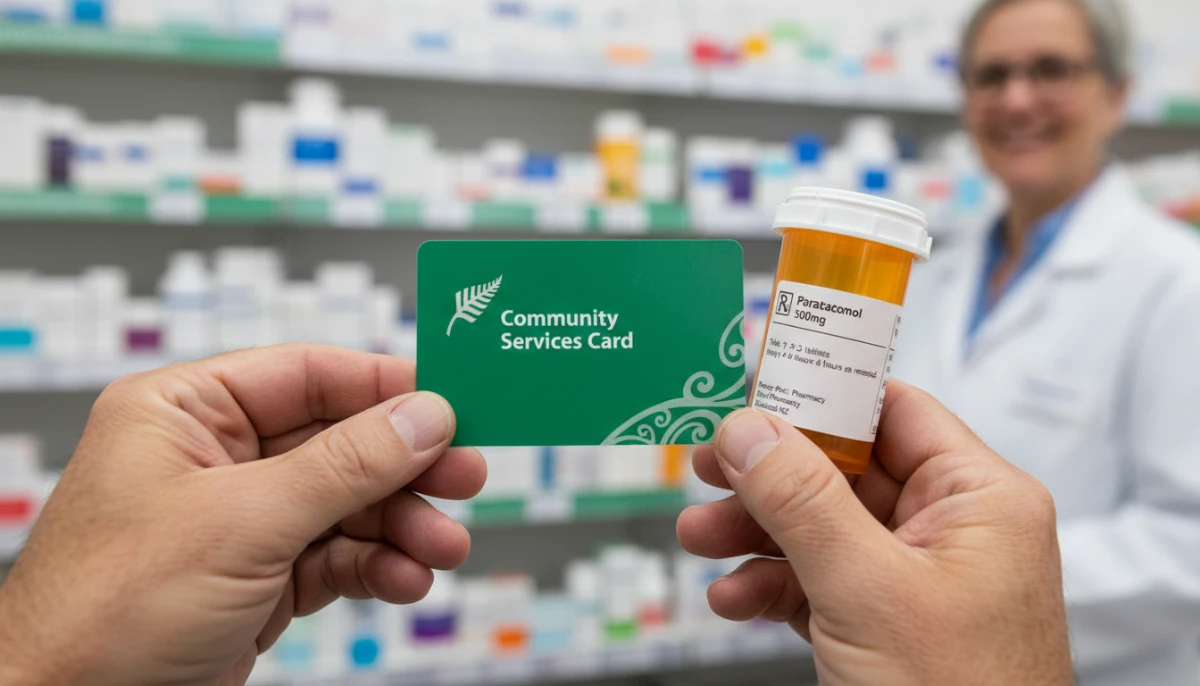
It is important to note that the card is not a payment method itself but an entitlement card. You must present it at the time of service to receive the discounted rate. This applies to both private practices and public health facilities across the North and South Islands.
What Benefits Does the Community Services Card Provide?
The scope of the CSC is broad. While most users associate it with the ‘chemist’ or ‘doctor,’ the high-utility nature of this resource extends into transportation and home heating. The benefits are designed to alleviate the pressure on low-income households by subsidizing the following:
- GP Visits: Significant reduction in consultation fees at your enrolled medical centre.
- Prescription Charges: Lower costs for pharmaceuticals (usually $5 or even $0 for certain items).
- After-Hours Care: Reduced costs for urgent doctor visits when your regular GP is closed.
- Dental Care: Limited subsidies for emergency dental treatment at hospital dental departments.
- Vision: Subsidies for eye exams and glasses for children under 16 through the ‘Spectacles Subsidy.’
- Home Insulation: Eligibility for grants under the Warmer Kiwi Homes program.

For those living in major metros like Auckland, Wellington, or Christchurch, the card often provides access to discounted public transport through local regional councils (e.g., the Community Connect scheme). This makes it one of the most versatile tools in the New Zealand social welfare toolkit.
How Do I Apply for a Community Services Card?
The application process for the Community Services Card is managed through Work and Income (WINZ). For many, this is a streamlined process that can be completed online or via post. If you are already receiving a benefit, such as the Jobseeker Support or Sole Parent Support, you likely won’t need to apply separately; your card is often issued automatically.
However, for low-income earners not on a benefit, you must download the Community Services Card Application Form from the Work and Income website. You will need to provide proof of income for the last 52 weeks, your IRD number, and valid identification.

The processing time typically ranges from two to four weeks. Once approved, your card is valid for a set period, after which you must renew it by confirming your income status. Proactive renewal is essential to avoid a lapse in subsidies at the pharmacy or clinic.
High-Utility Resources for NZ Families
In addition to the CSC, New Zealand families should leverage the broader ecosystem of health and family support services. These resources are designed to work in tandem with the card to provide a safety net for those navigating financial hardship or health crises.
Working for Families (WFF): This tax credit system provides extra income to families with children. It includes the Family Tax Credit and the In-Work Tax Credit. Best Start: A payment of $79 per week for each child born on or after 1 July 2018, available until the child turns one, regardless of income. For those on lower incomes, this payment continues until the child turns three.
- Healthline: A free, 24/7 service (0800 611 116) for medical advice.
- ACC: Coverage for medical costs related to accidents and injuries, regardless of who was at fault.
- Plunket: Free health and wellbeing support for children under five and their families.
- Youthline: Support services for young New Zealanders navigating mental health challenges.

By integrating these resources, families can significantly lower their annual expenditure. For example, using the CSC for GP visits while receiving Best Start payments provides a dual layer of financial protection during a child’s formative years.
Key Takeaways & Conclusion
Navigating the New Zealand health subsidy landscape can be complex, but mastering your eligibility for community services card benefits is the most effective way to protect your household budget. Whether you are a student, a retiree, or a working family, these subsidies ensure that financial status does not become a barrier to physical and mental well-being.
Key Takeaways:
- Check your annual gross income against current 2025 thresholds to confirm eligibility.
- Present your card at GP clinics and pharmacies to access instant discounts.
- Students on an allowance and current benefit recipients are generally eligible.
- The card also provides benefits for transport, insulation, and dental emergencies.
- Apply via Work and Income (WINZ) and ensure you renew before the expiry date.
About the Expert
Aria Thompson is a Senior SEO Architect and Public Policy Analyst based in Auckland, New Zealand. With over 15 years of experience in technical SEO and government communications, Aria specializes in making complex legislative information accessible to the general public. She holds a Master’s degree in Social Policy from the University of Auckland and has consulted for various NGOs across the Tasman.